14th Street Overlay
A permanent public commission for the City and County of Denver
Wes Heiss and Marek Walczak
Completed in May, 2013
Challenged with the task of developing a 12 block long sculpture that ties a street together and motivates visitors to explore the city, Walczak & Heiss developed a piece that is intentionally hard to find. The small curious objects, hidden in plain sight, conceptually link one block to the next. Each combines a specific view of the existing street with narratives and projections of the past. Collectively they operate as a sort of treasure hunt while visually blending with their surroundings. It takes a particular sort of attention to track them all down but this is one of the many successes of the piece. It creates a lasting period of discovery and interaction while simultaneously asking the public to look more closely at the world around them.
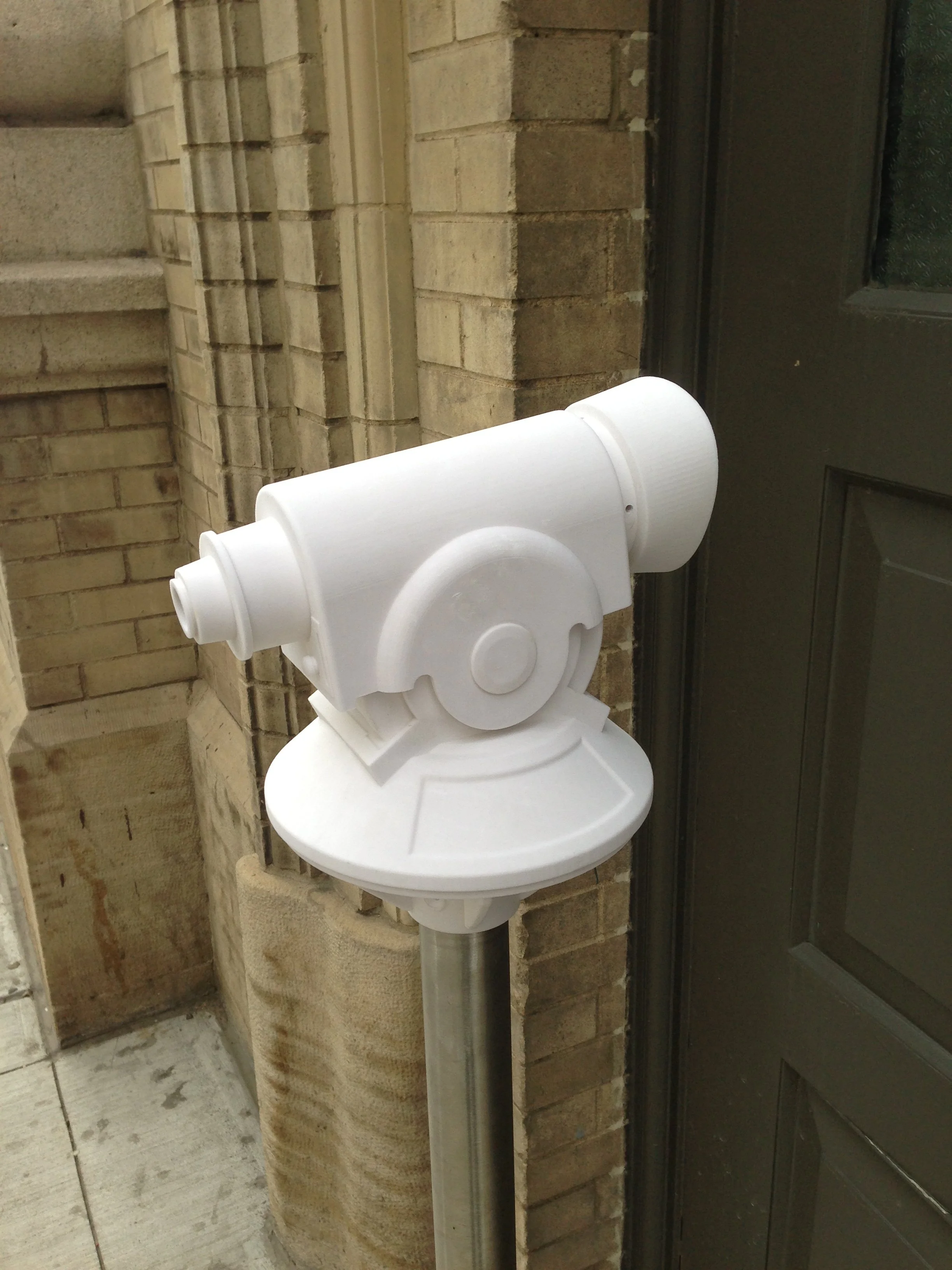
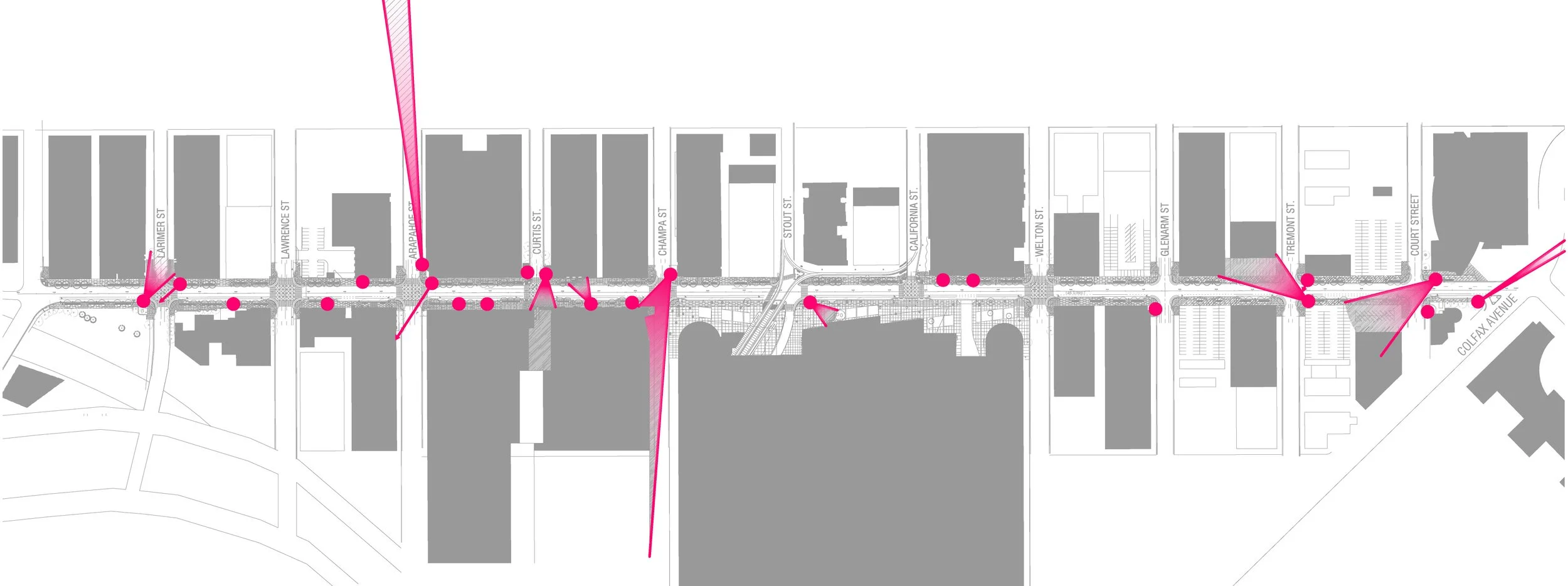
Fourteenth Street Overlay is a civic artwork situated in downtown Denver Colorado. The piece occupies 12 blocks of 14th street between Market and Colfax and consists of 23 small cast bronze sculptures. These small sculptures resemble optical instruments from different eras which have been embedded in the streetscape. Mounted to bicycle racks, wayfinding signage and on their own posts, each optical instrument in this collection has been re-purposed to function in a unique way.
Each individual sculpture has been specifically designed to align both visually and historically with its selected site. This historical alignment creates a sort of ‘time machine’ that looks into the past by superimposing historic photos over a matching real-time view of the street. Through meeting with residents, historians and mining the cultural records of Denver’s libraries and museums, the artists discovered countless of images and stories about sites along this particular section of 14th street.
What might at first seem to be a historically unimportant street on the edge of the downtown grid is revealed to have a rich story that parallels the city’s economic rise, fall and return to prosperity over the past 100+ years.
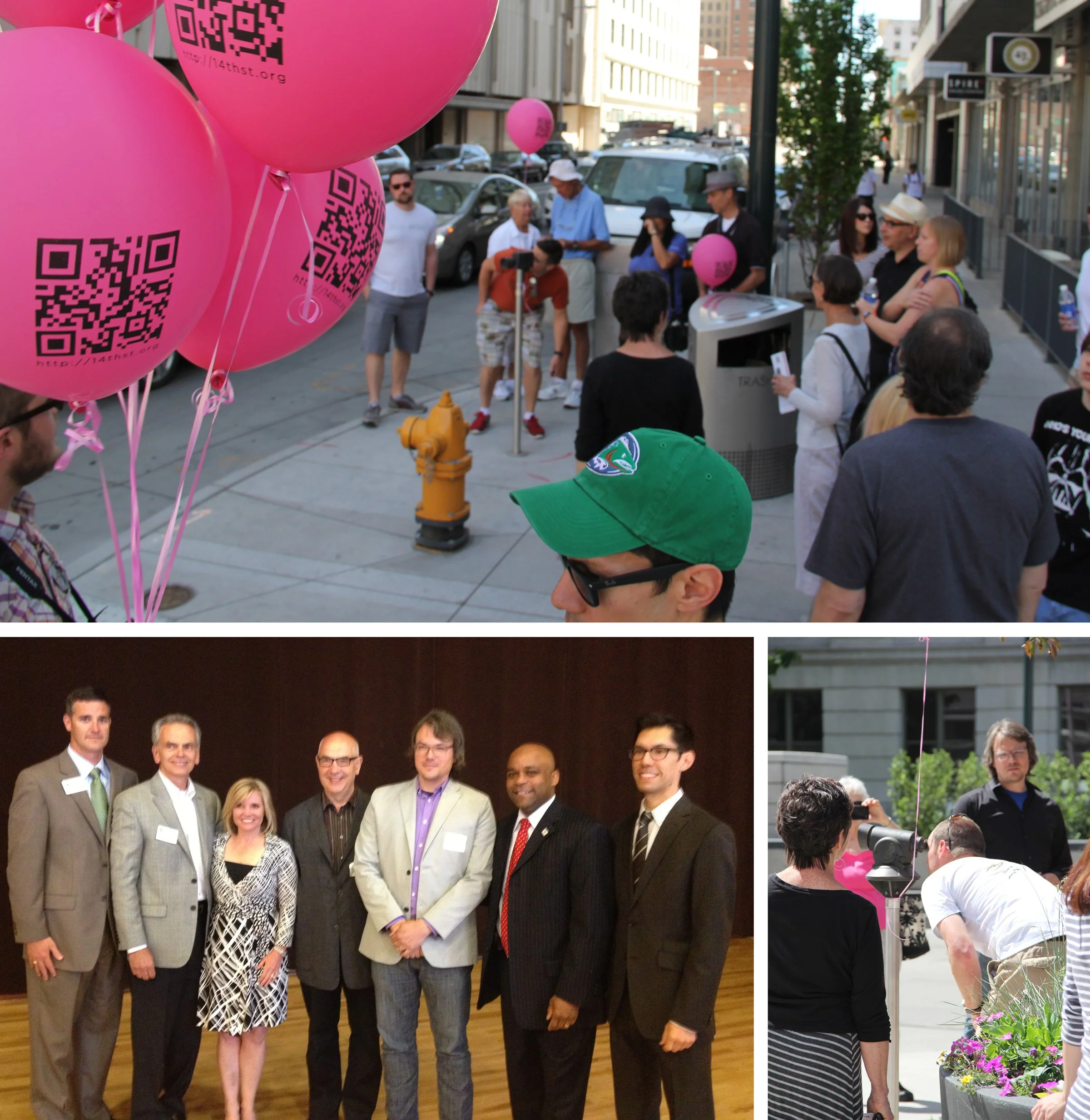
Both major and minor events in Denver’s past are recontextualized in the modern city. Examples include a TV from the 1960’s which shows the ‘City Hall War’ of 1894 when protests broke out against police and fire board appointments. Visible though a 1970’s motion picture camera one can see when snow was carted down from the Rocky Mountains just for the senators at the 1908 Democratic convention to have snowball fight. On a modern smartphone mounted to a bicycle rack a mastodon lumbers through a Denver that has yet to be settled by humans. Through an instant camera the ghostly image of a luxury hotel, long ago demolished, hovers over the empty parking lot where it once was. Each story speaks directly to the significance of the place where you are standing. Mounted below or on the castings a QR code can be scanned with a smartphone and will direct you to 14thst.org. This website explains the story you are looking at and directs you to more information and the image sources.
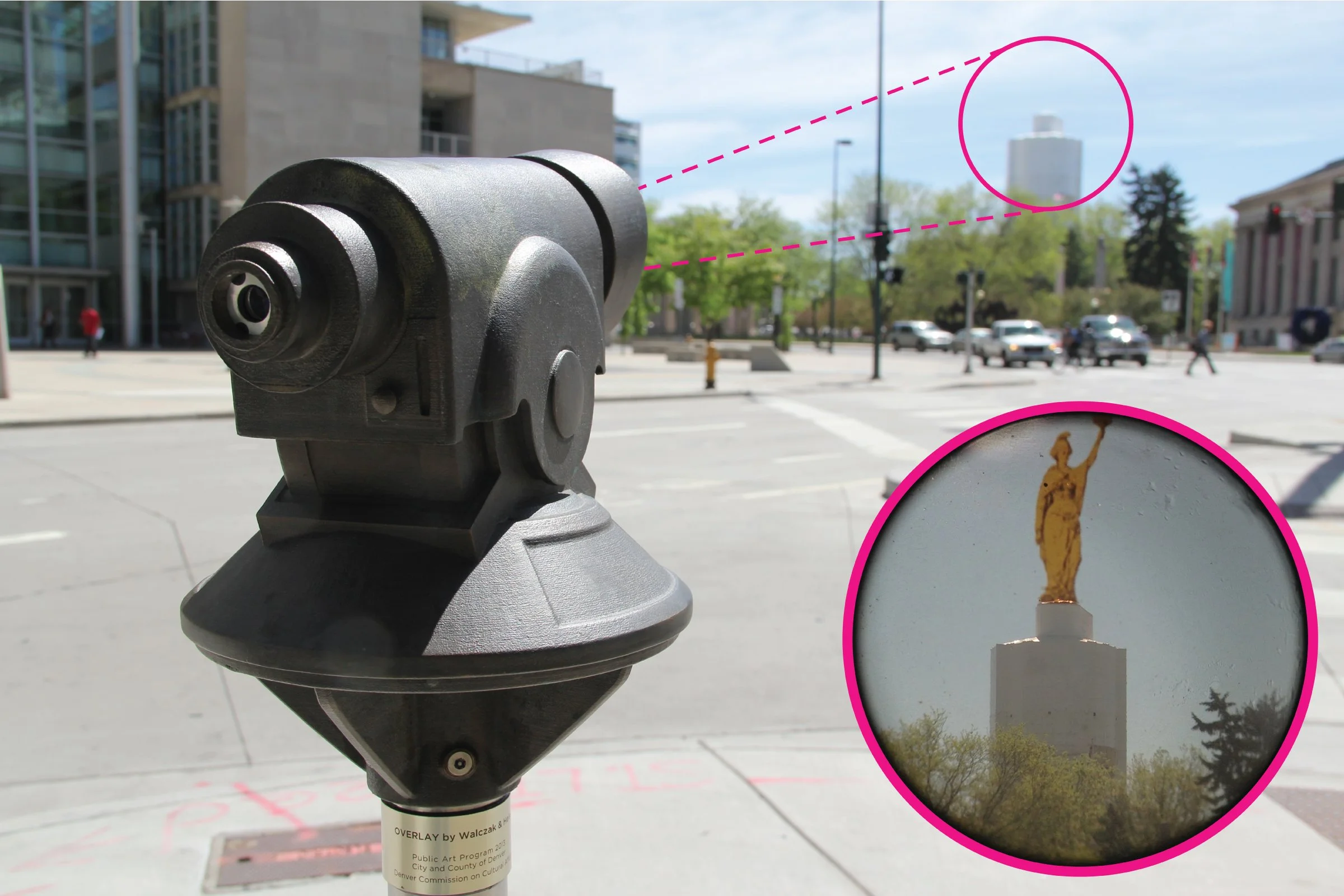
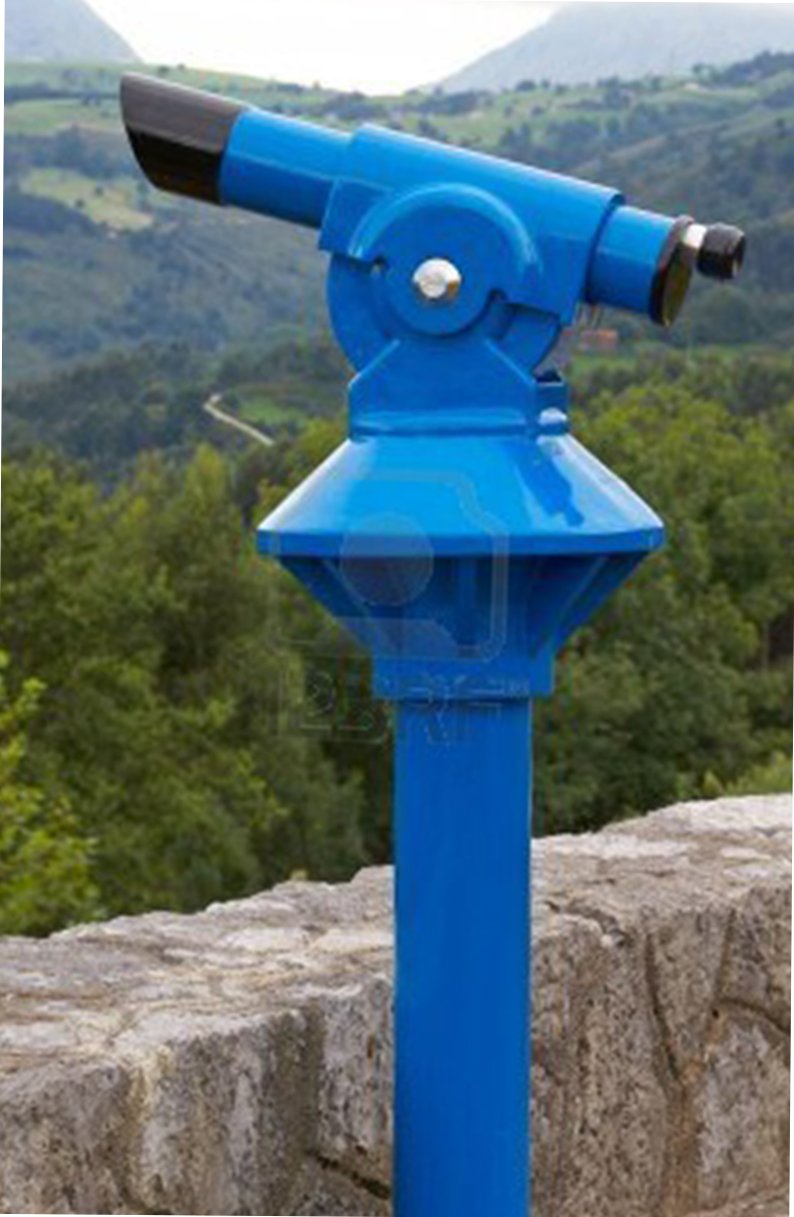
The never-installed statue meant for the top of the capitol building can only be seen through this scope. Custom optics allow both to be in focus at the same time.
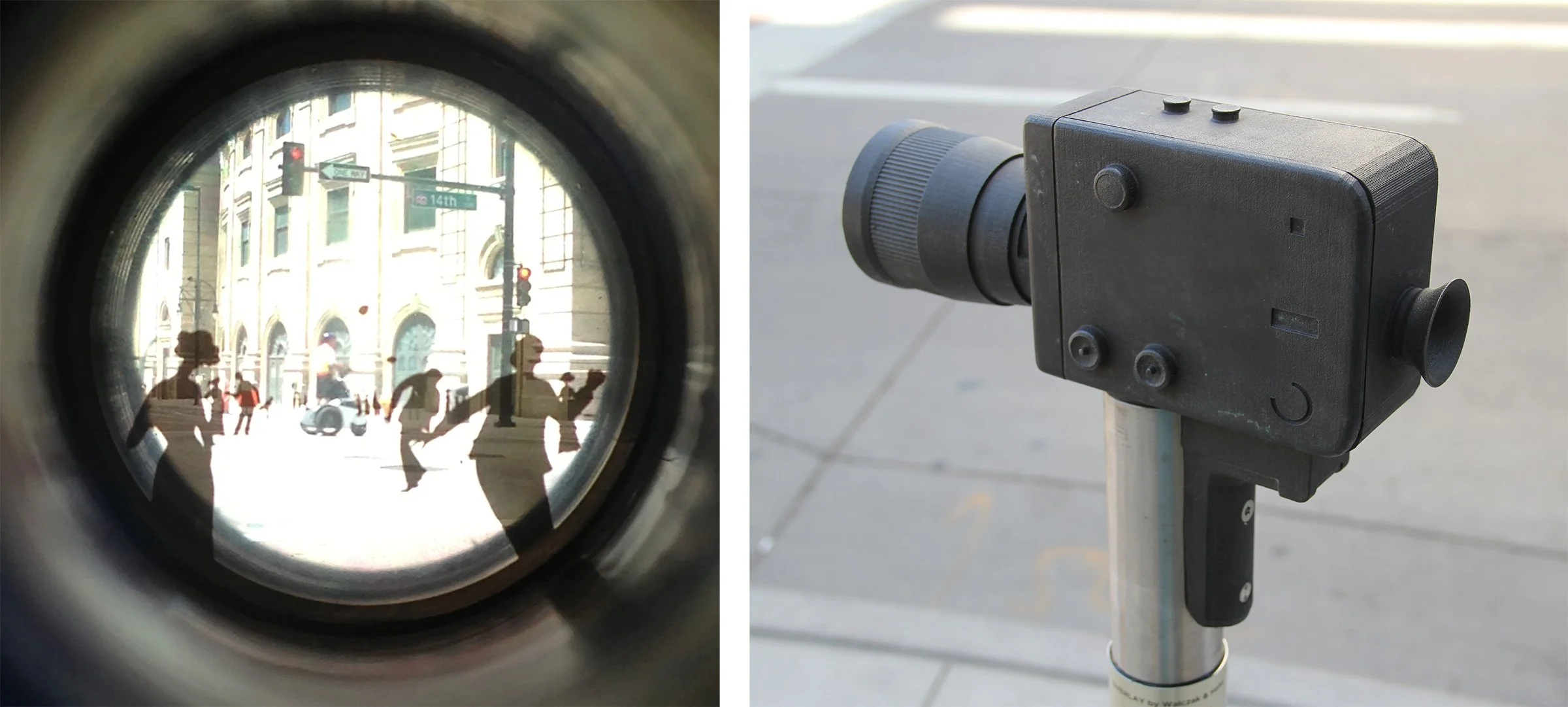
Senators snowball fight at the 1908 Democratic National Convention seen through a Braun Nizo
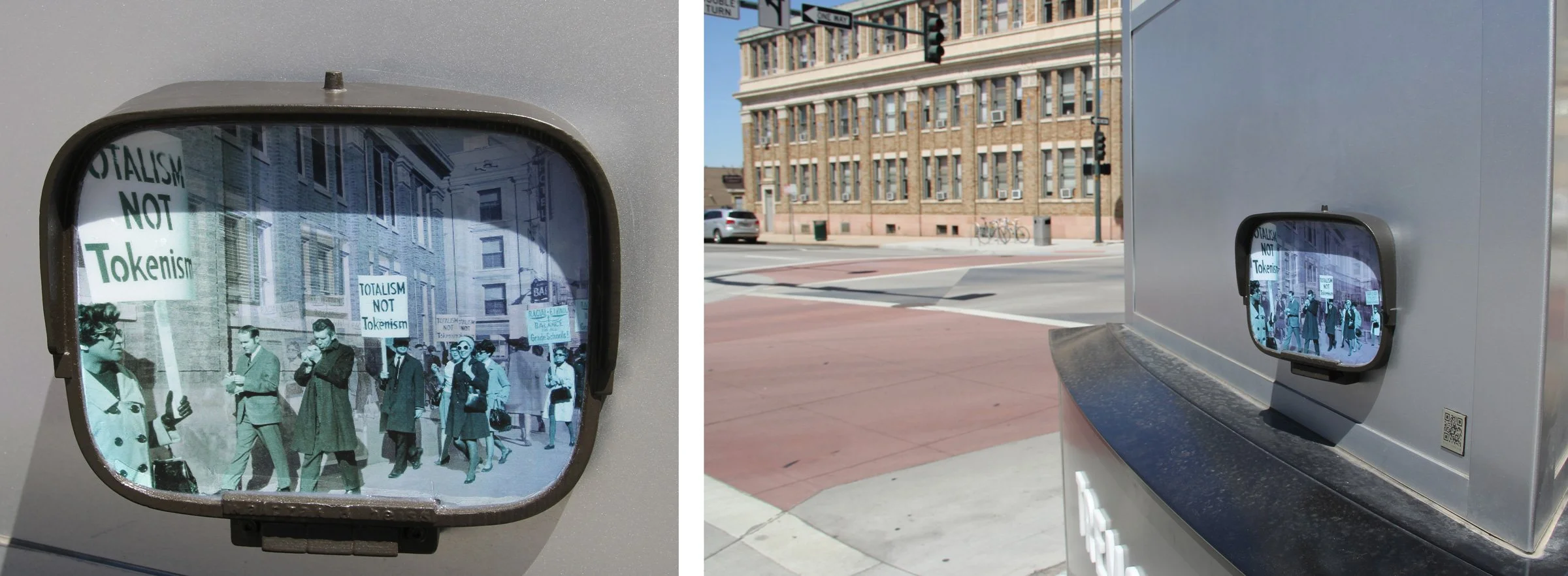
Site of the teachers union strikes in the 1960’s is animated on a Sony 8-301 portable TV
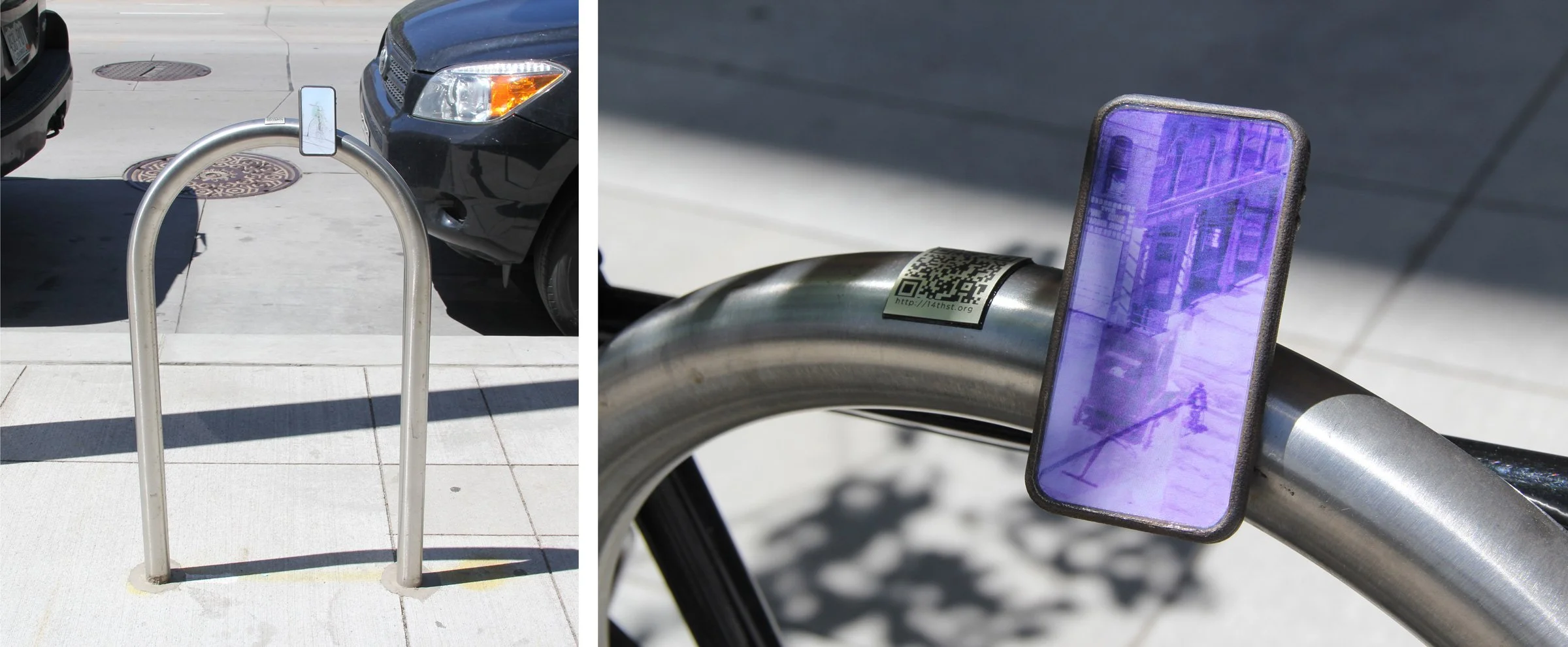
A smartphone mounted to a bike rack reveals the same streetscape from 7 different eras
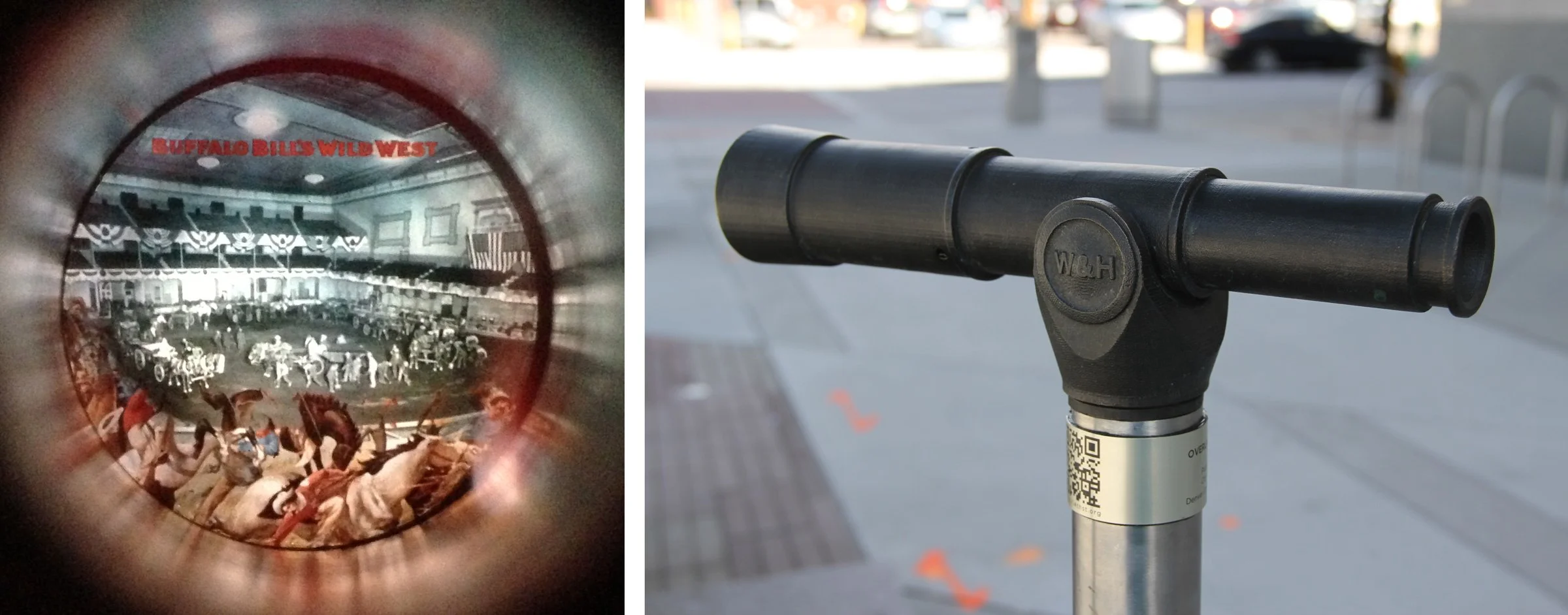
Buffalo Bill’s Wild West Show inside the Opera House seen through a Spyglass
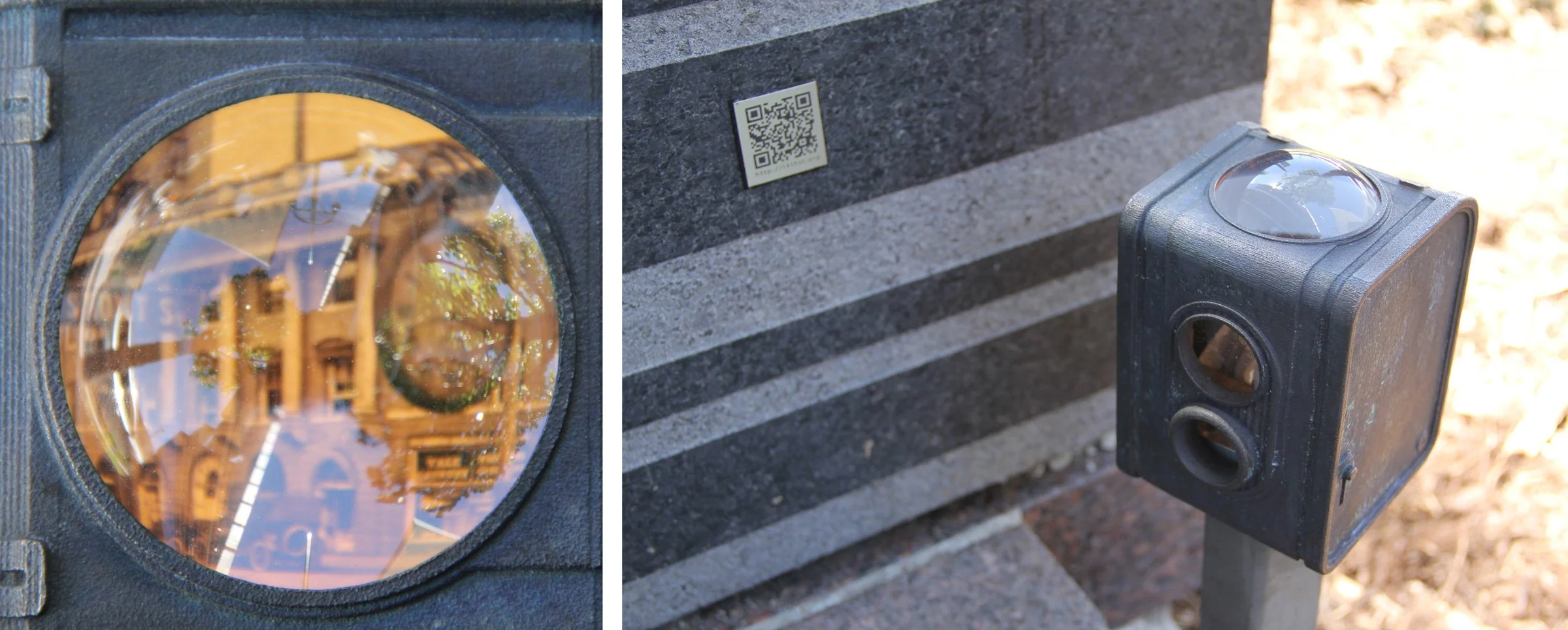
The ‘Pharmacy Neighborhood’ is now completely gone, as seen through a Kodak Duaflex
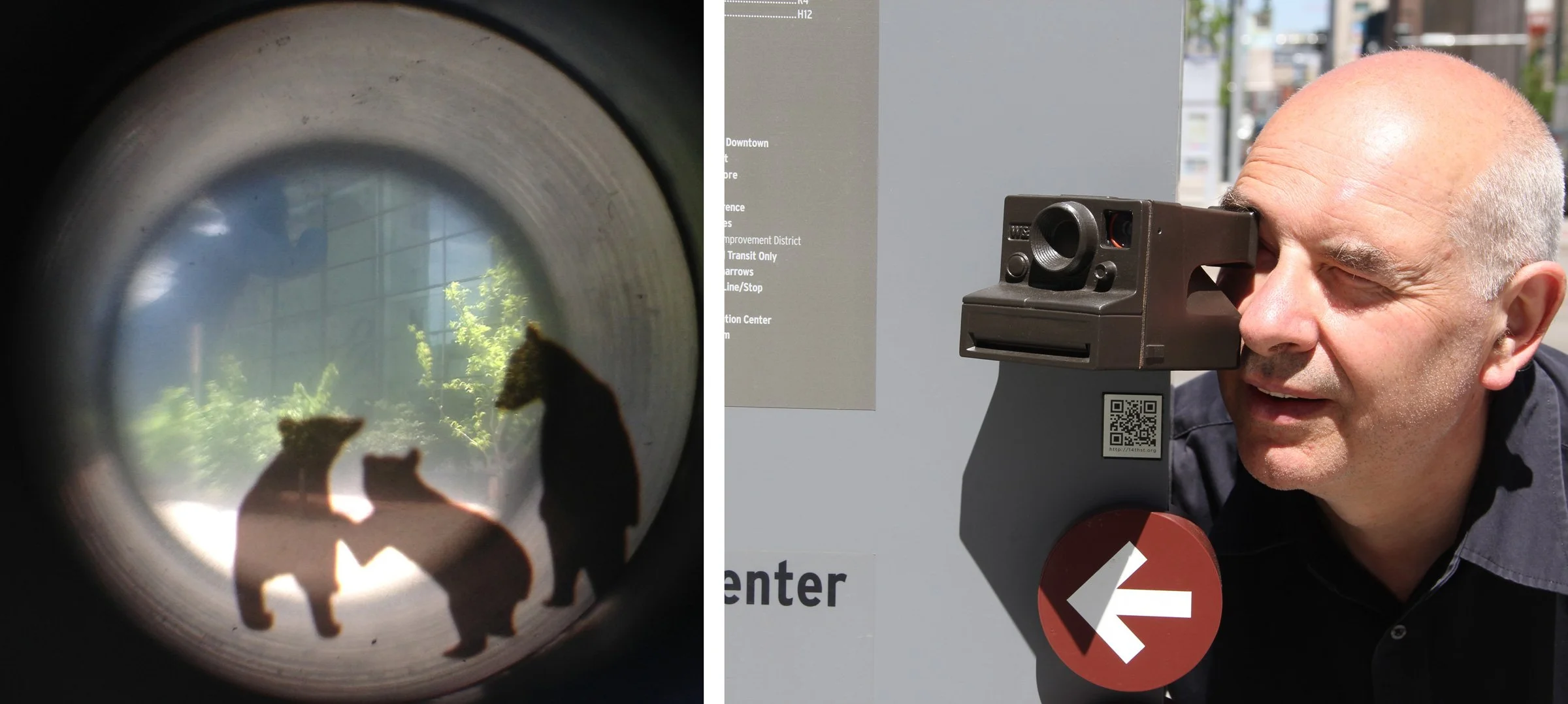
An instant camera adds some cubs to the big blue bear
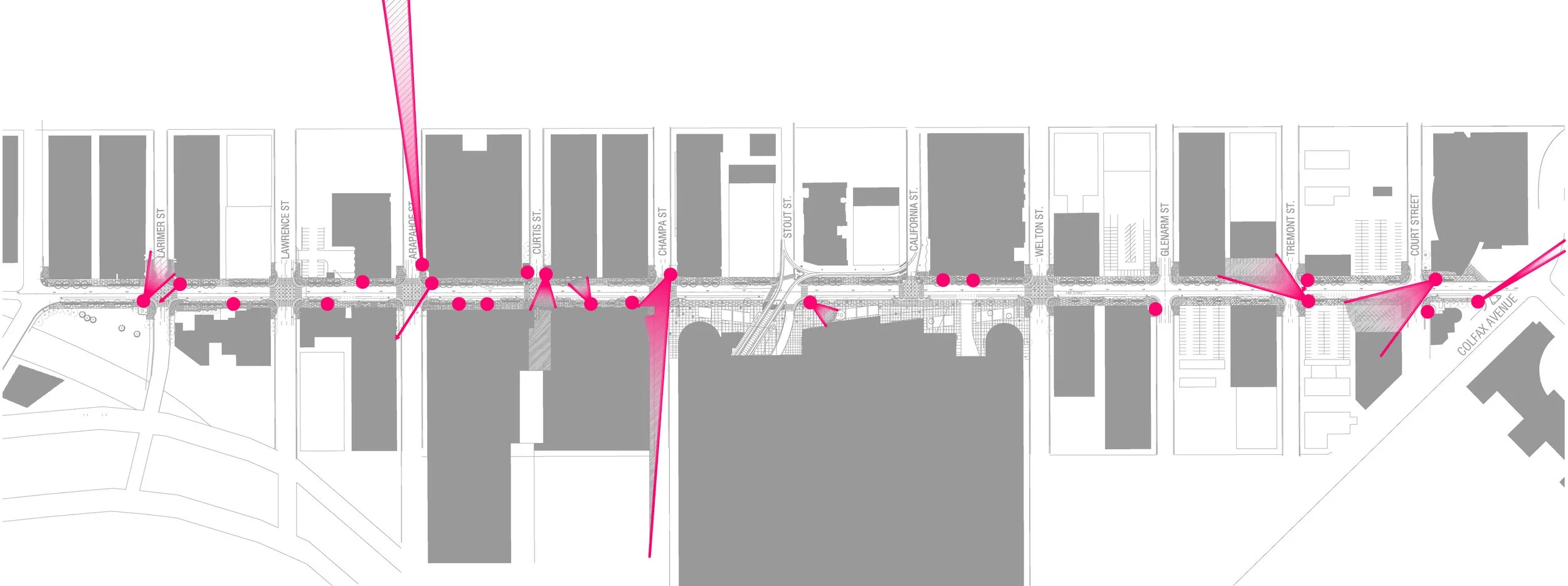
map of the 23 object locations
The castings themselves represent a wide array of historically significant designs that have recorded events over the past century. From the democratically affordable instant camera of the 1970s and twin lens reflex cameras of the 1940s, to the national park coin operated viewer, to the now ubiquitous smartphones, all represent different ways of seeing and recording the human experience. Every one of the 23 sites for the castings presented unique challenges. Finding locations that matched each sculpture to the existing photographic records of its associated historic event while simultaneously negotiating permission from nearby property owners was a slow but ultimately rewarding process.
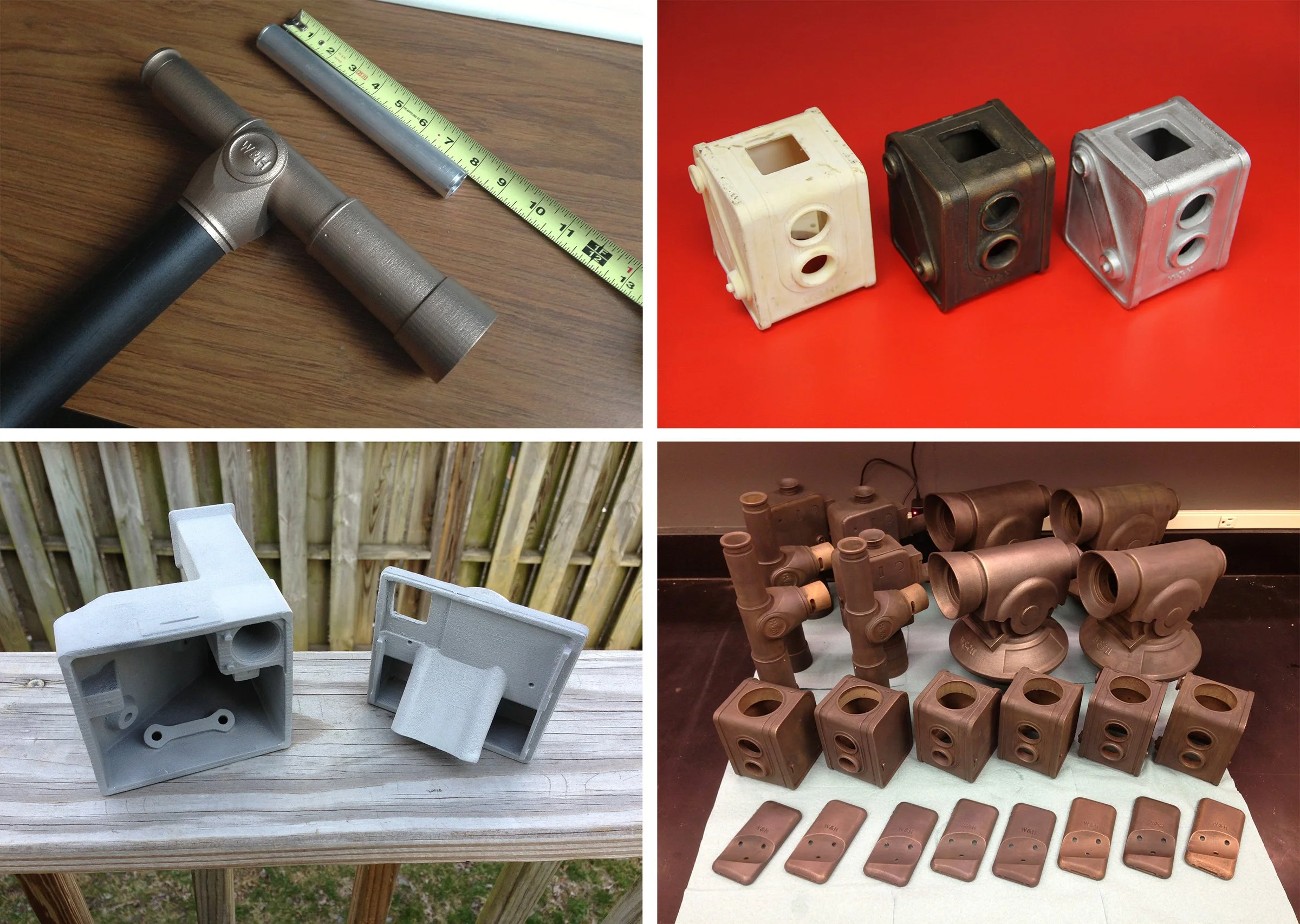
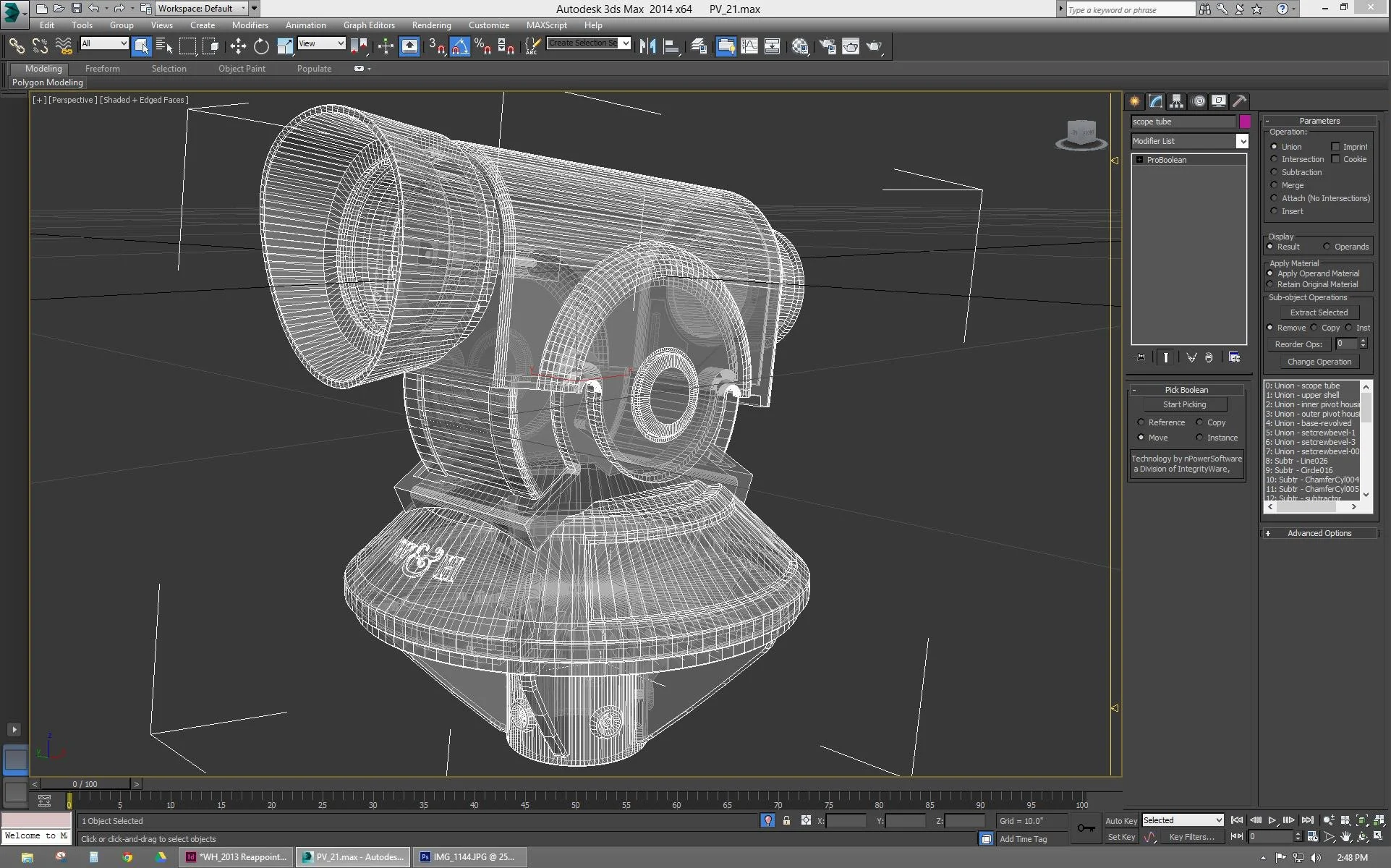
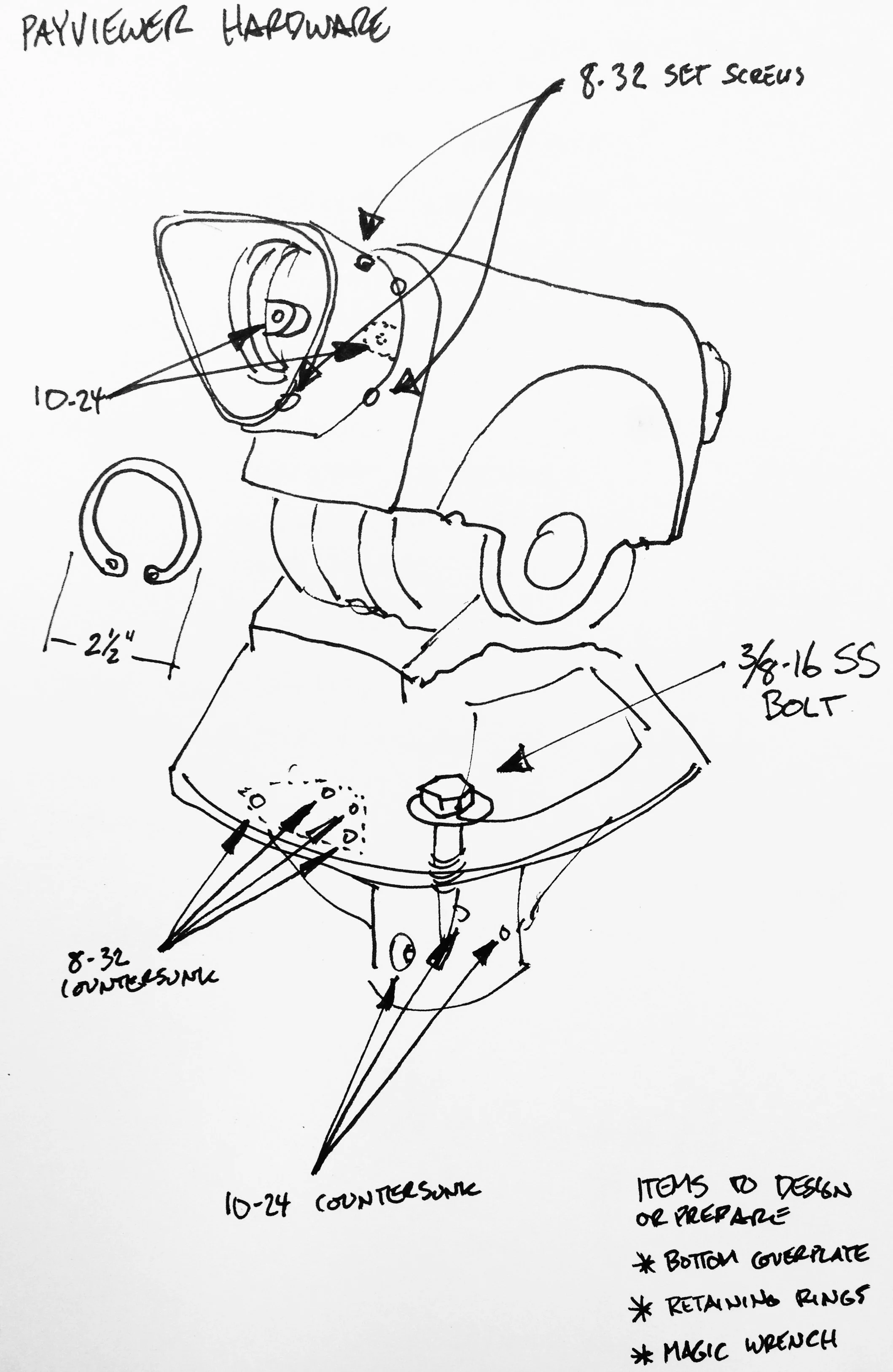
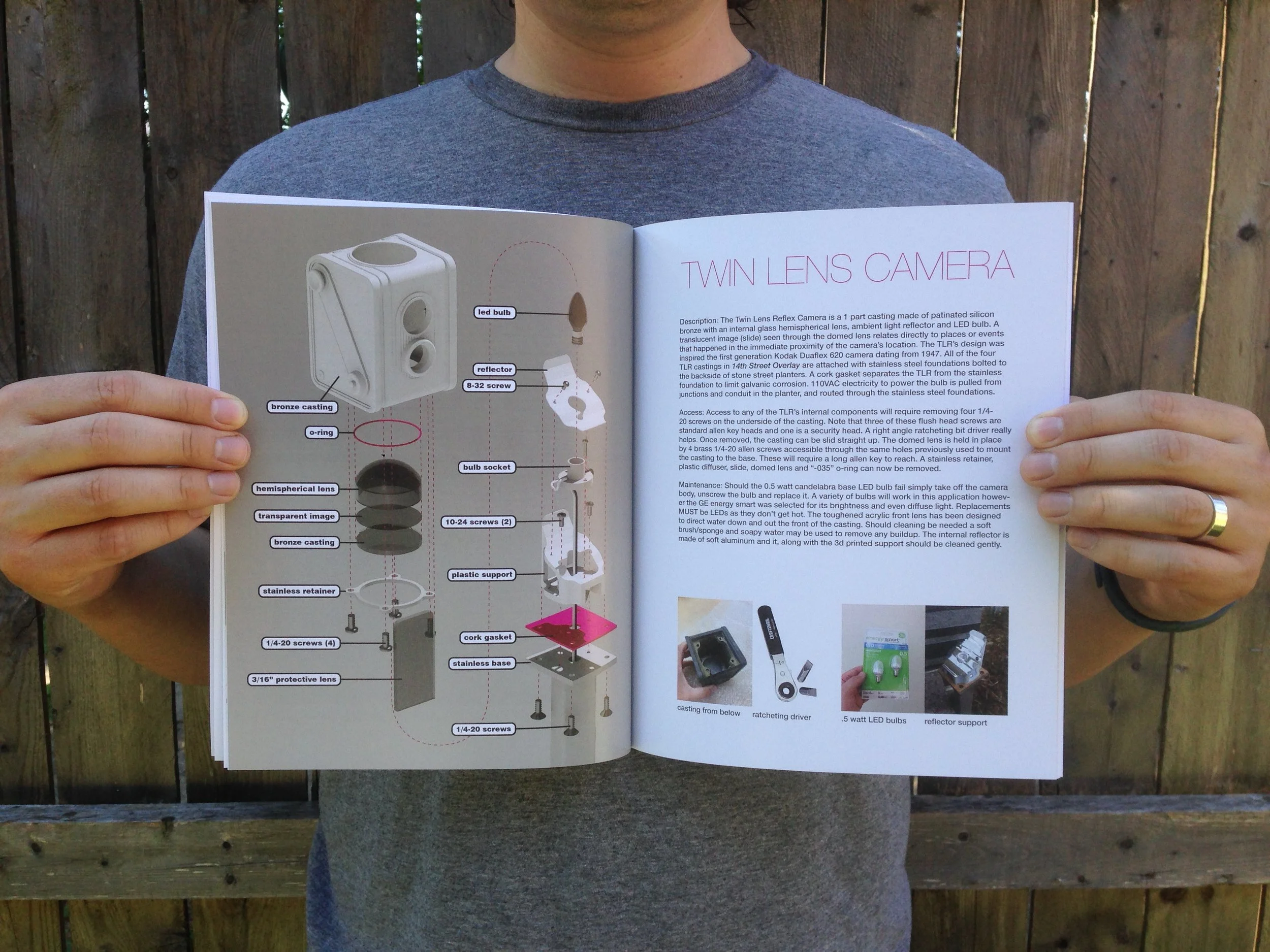
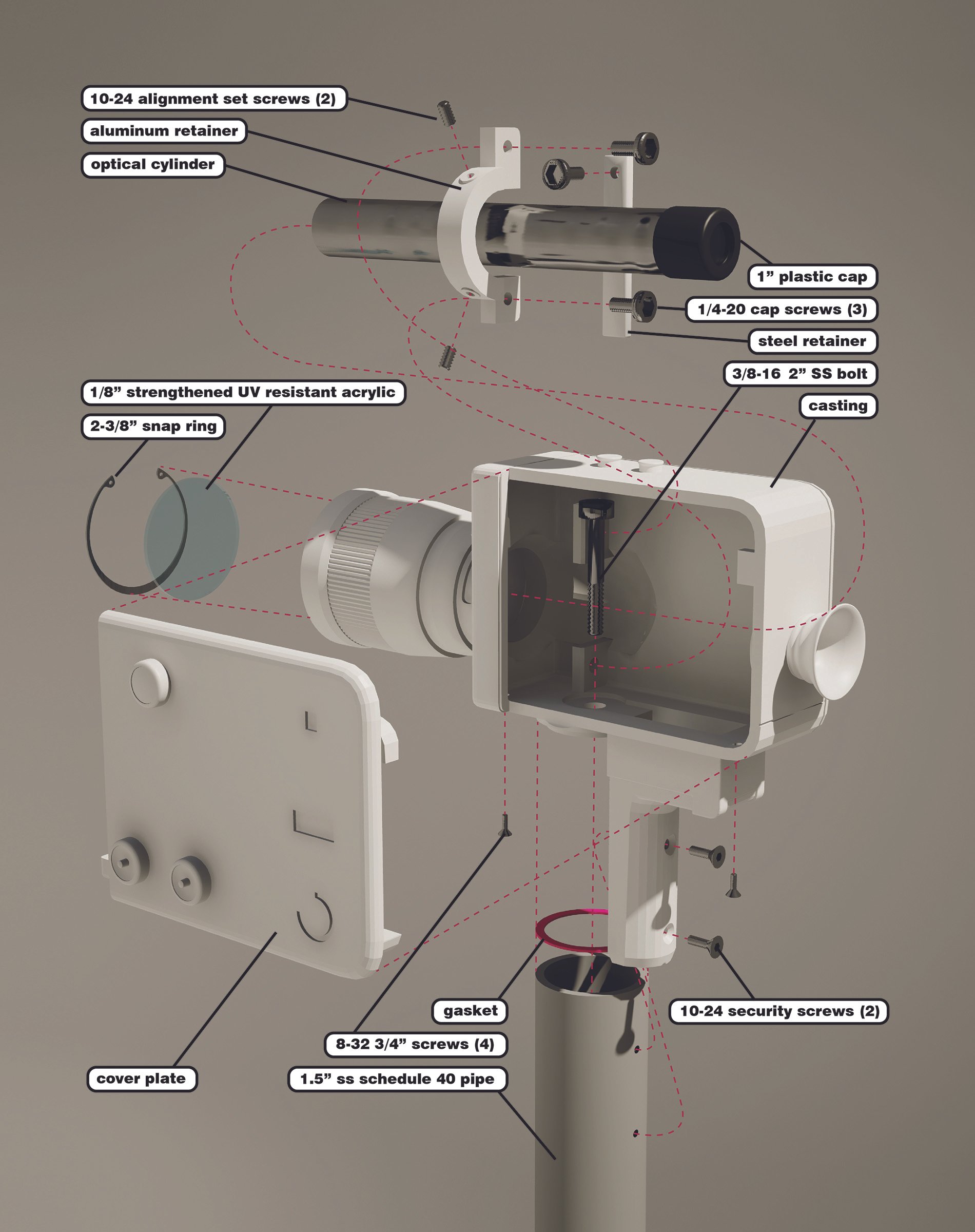
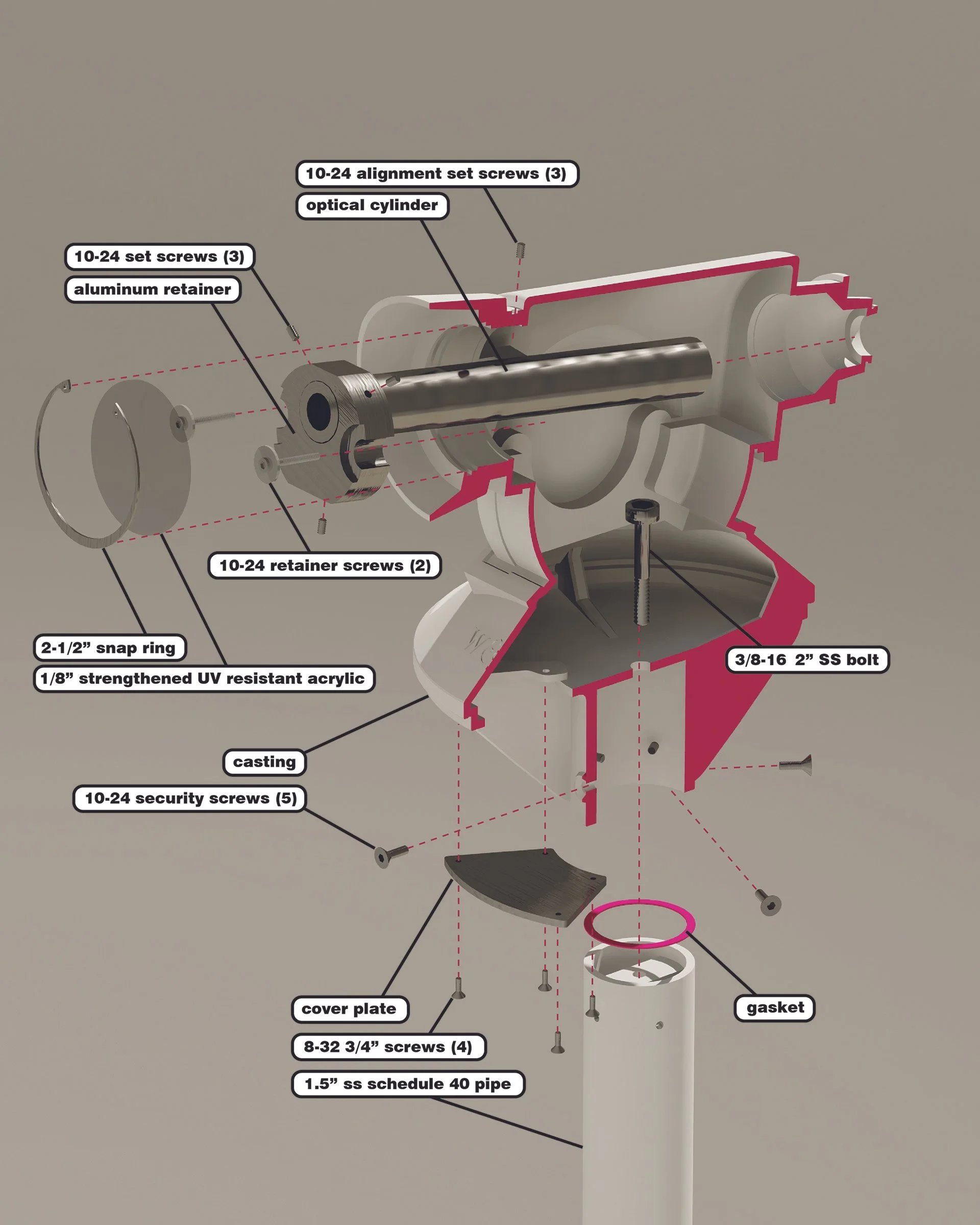
14th Street Overlay uses three different types of technologies to make the superimpositions work. Some have lenticular screens which create an analog animation when you move about the piece, some have illuminated slides that can be seen at night, and some have optical cylinders, like a targeting sight, that combine a transparent slide with a precisely aligned view. Civic Space worked with mechanical and optical engineers in order to make the piece not only functional but reliable and nearly maintenance free through Denver’s dramatic weather for years to come. Rather than working with traditional artist bronze casting processes, each of the castings were modeled in 3D software, Rapid Prototyped multiple times and lastly manufactured with the help of an industrial manufacturer. This costly and complicated process was required to make the inside of the castings just as dimensionally precise as the outside in order to accommodate the optical systems.
Through its clear concept and execution this piece is easy to understand and invites the public to participate. It is also a piece that is precise and specific to it’s site while simultaneously being mysterious and completely open to interpretation. In the end, 14th Street Overlay asks what might have happened before. Is there a secret history inside that drain pipe? There’s only one way to find out.