MARKERS
Denver Arts and Venues
Denver, Colorado
Completed 2022
Concept, design, and execution: Wes Heiss & Marek Walczak
Flood information by David Bennetts of MHFD
Foundations by Two Brothers Concrete
Installation by Junoworks
Landscape architect Mark Wilcox
Landscaping by High Steppe Landscapes
Laser Cutting, Trexler Industries
Metalwork by DiBello Metal Designs
Neighbor Fred Glick
Photography by Wes Magyar
Proposal Design team Carl Skelton
Rudi Cerri & Michael Chavez of Denver Public Art
Site project manager Brian Freeland
Structural Engineer John Migliaccio
Tractrix Horn design by Erik Forker
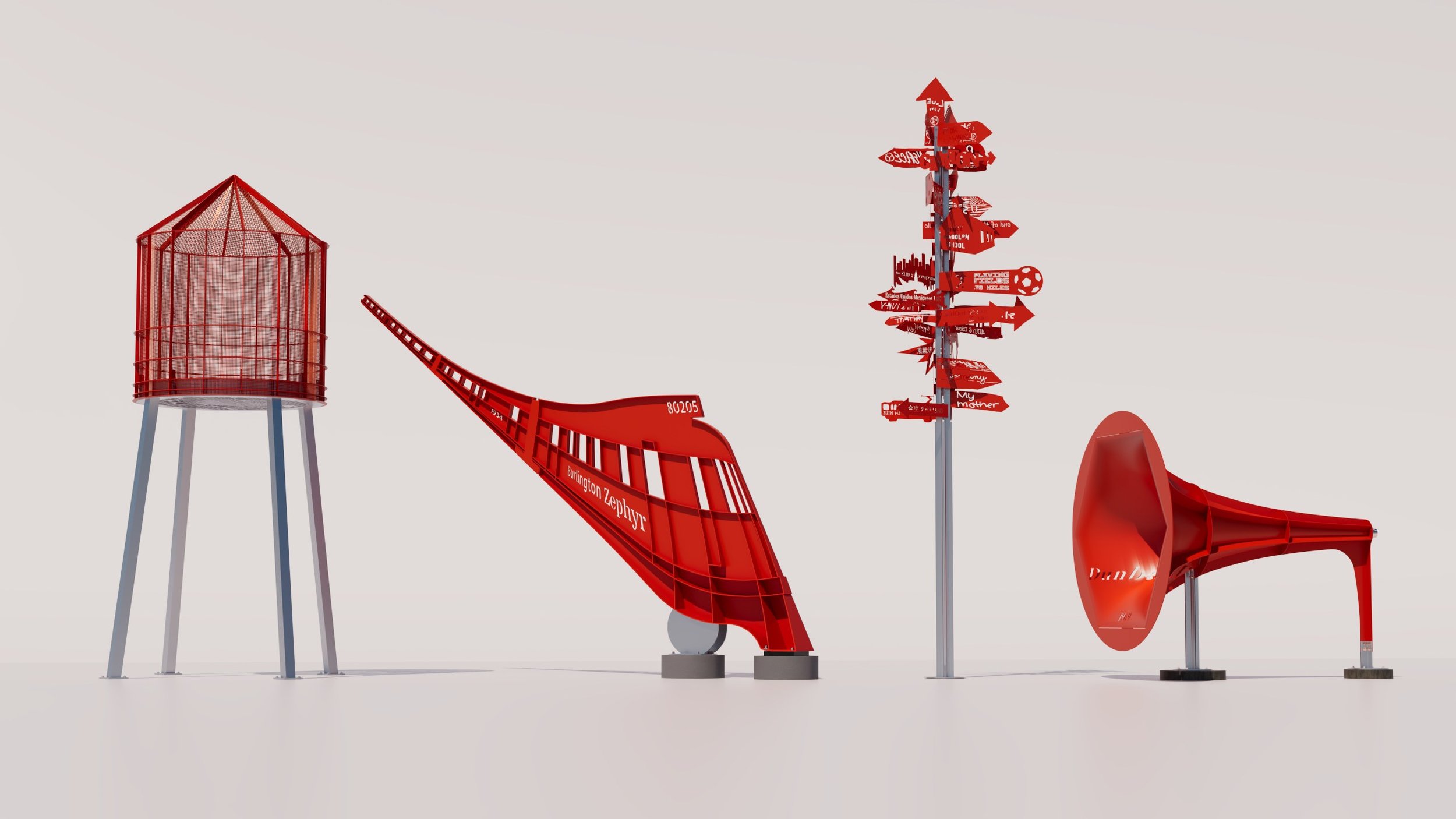
In the north side of Denver, a mile long park has become a space where the past merges with the present in markers, a series of four public art installations.
The works explore the evolving significance of the Clayton and Cole neighborhoods, the area that is home to the park, to residents past and present. All of the works are interactive and allow visitors to engage with each piece. Though each work is unique, they all share the same distinctive red-orange hue. They are also grounded in their connection to the site—whether it be by marking a direction, referencing local history, or embodying community connections. markers was inspired by a diversity of sources, including the local community and historical research.
01. FLOOD
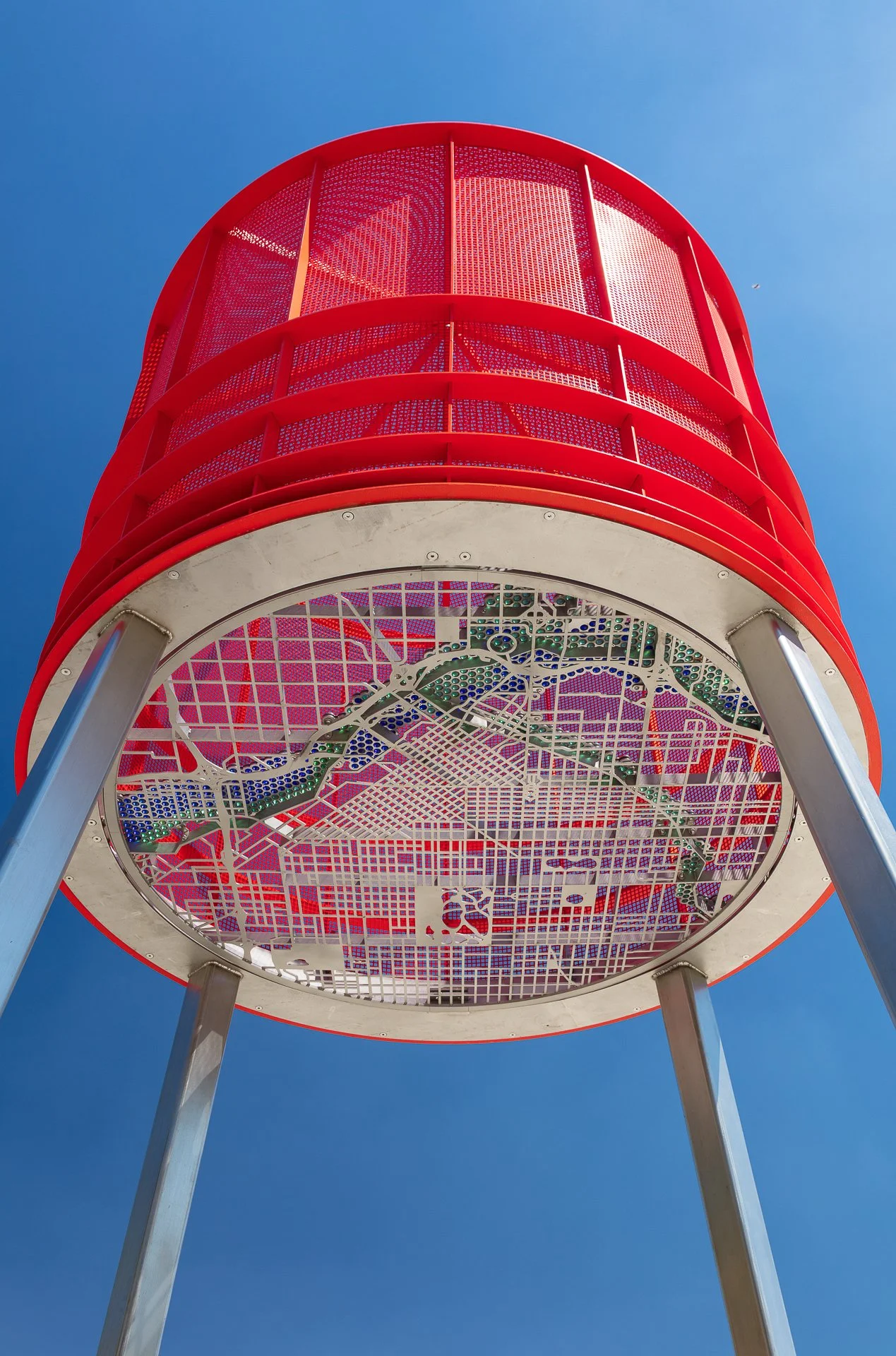
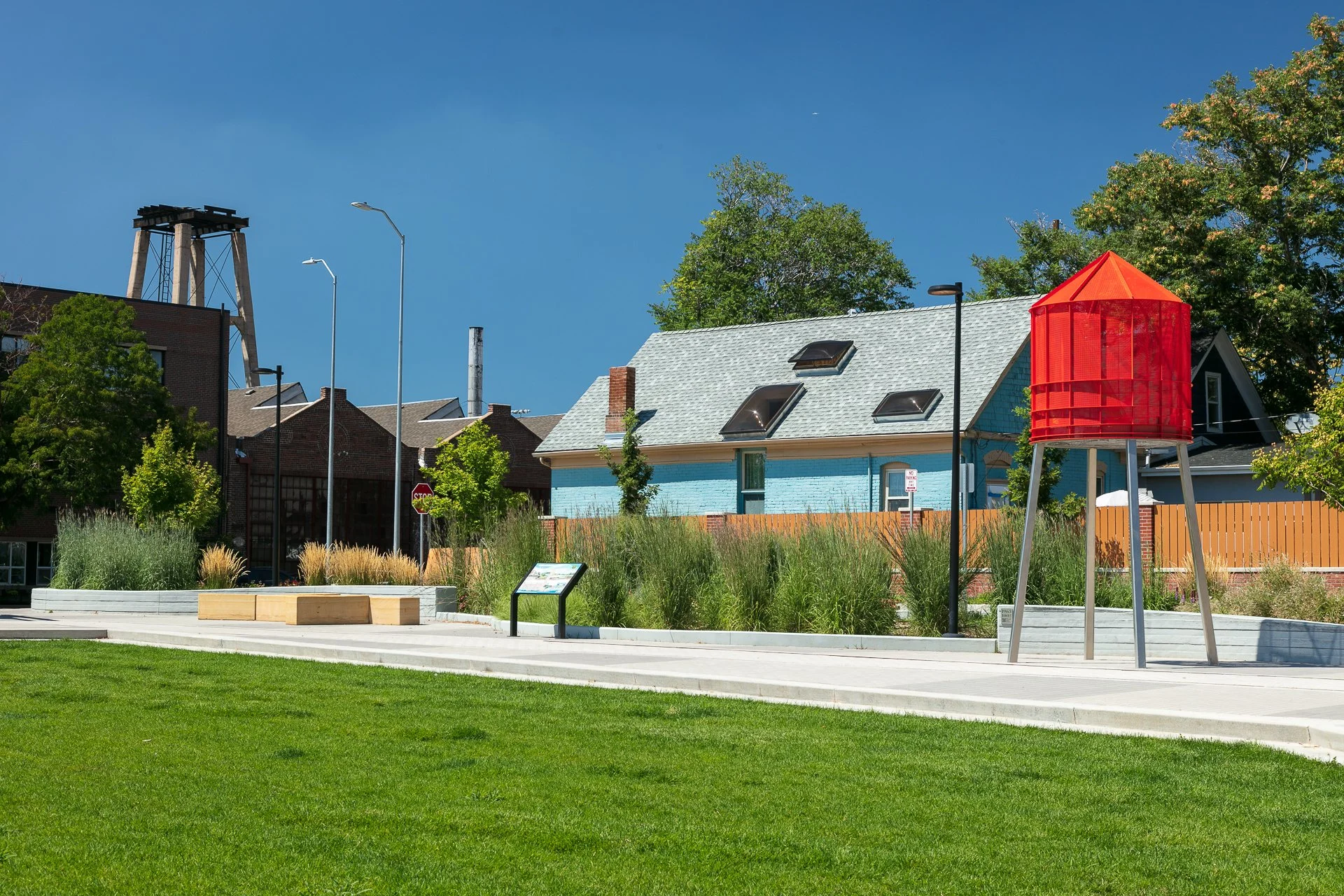
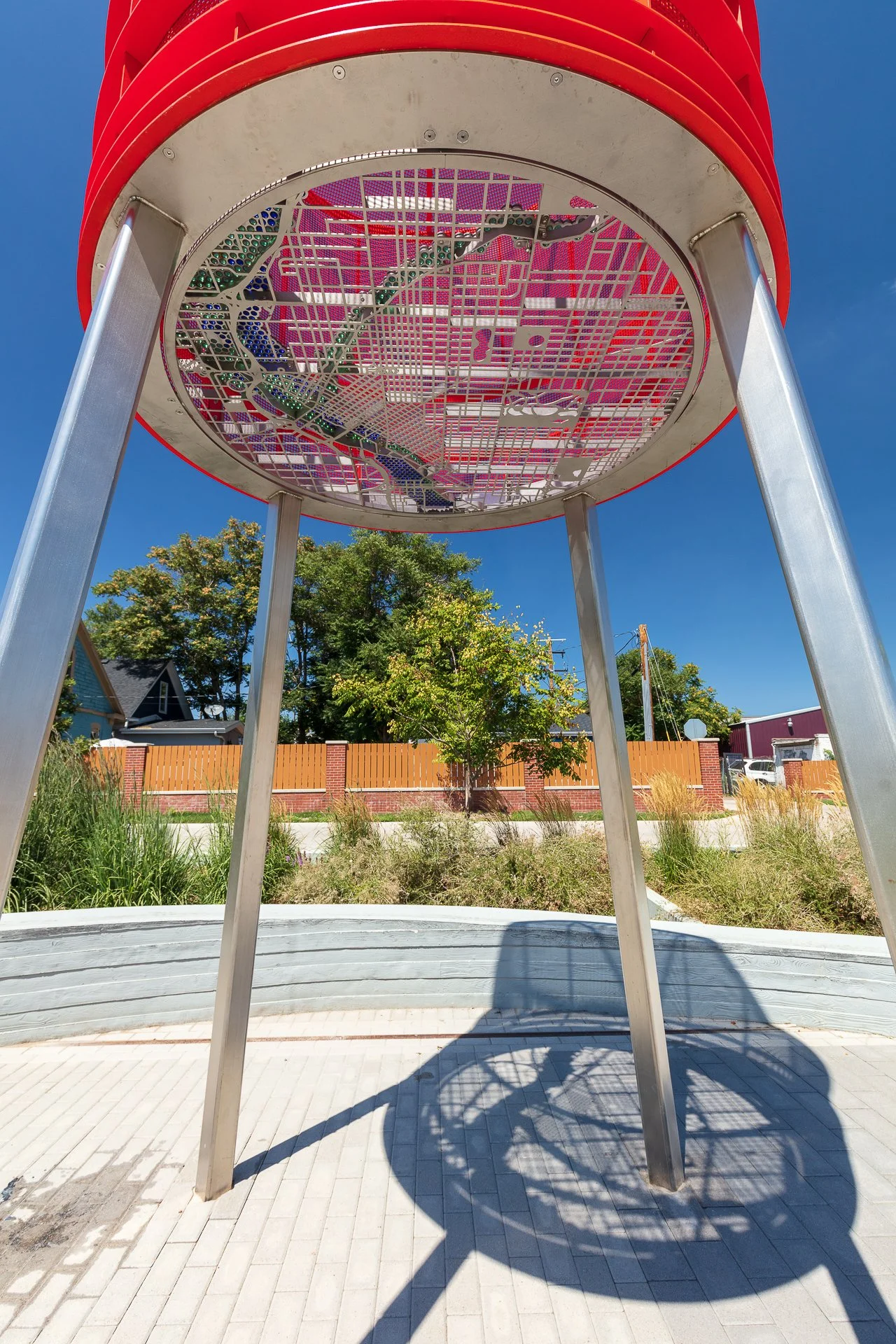
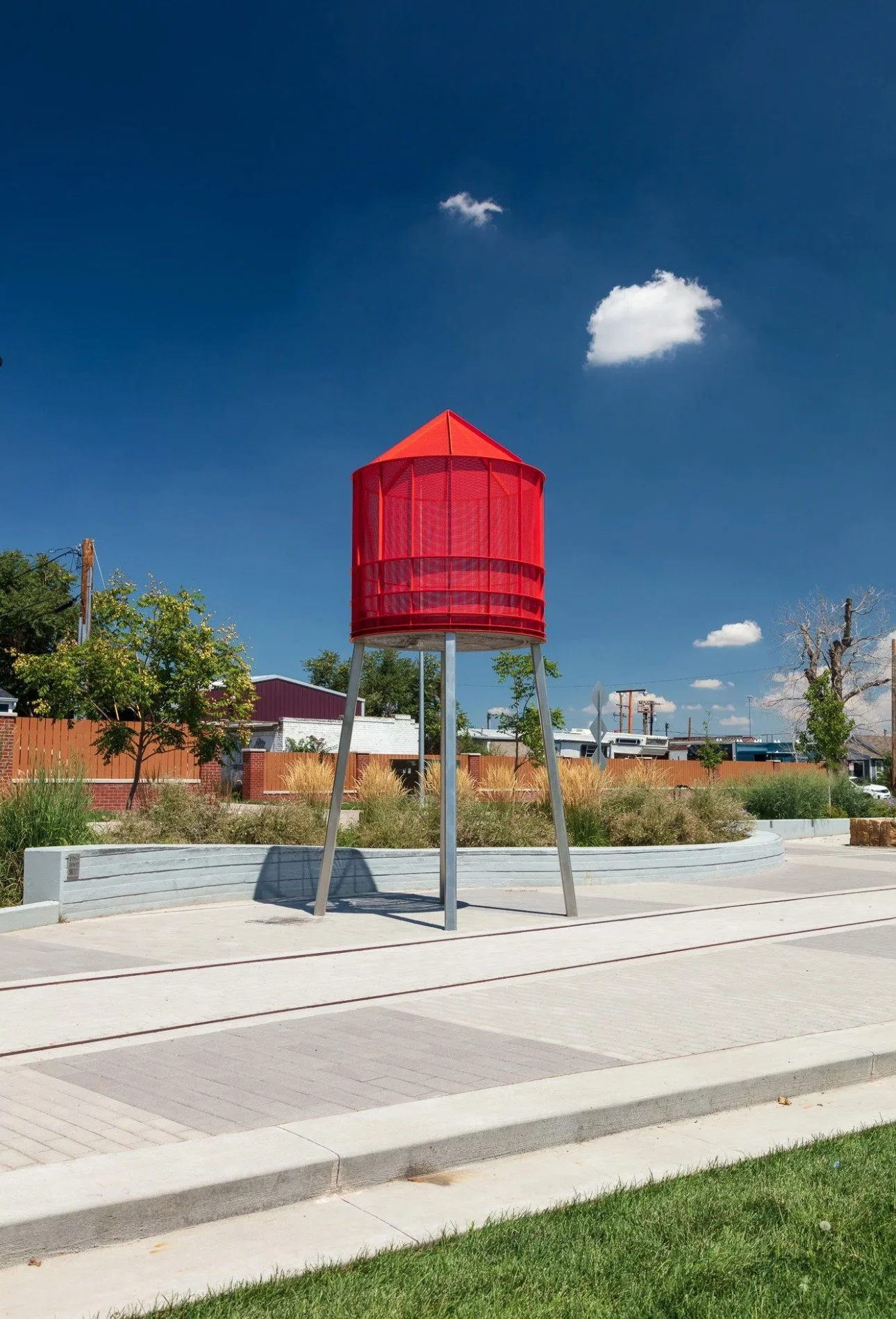
39th Avenue Greenway is more than a park—it is an essential part of infrastructure that collects and directs rainwater during a flood. This piece is connected to the park by highlighting a catastrophic Denver flood from 1965, a projected 100 year flood that has yet to happen, and the impact of Denver’s history of flooding on the local neighborhoods.
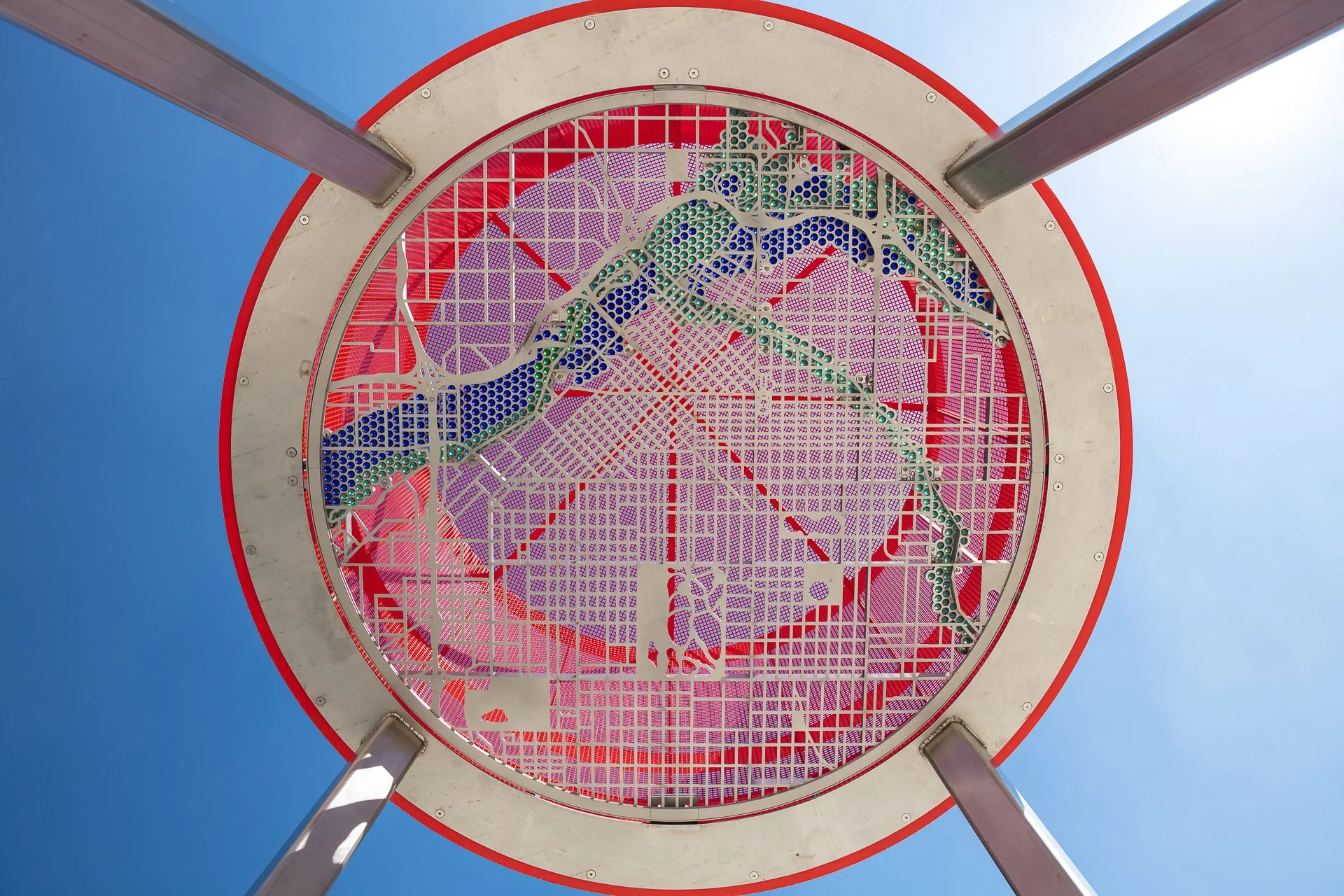
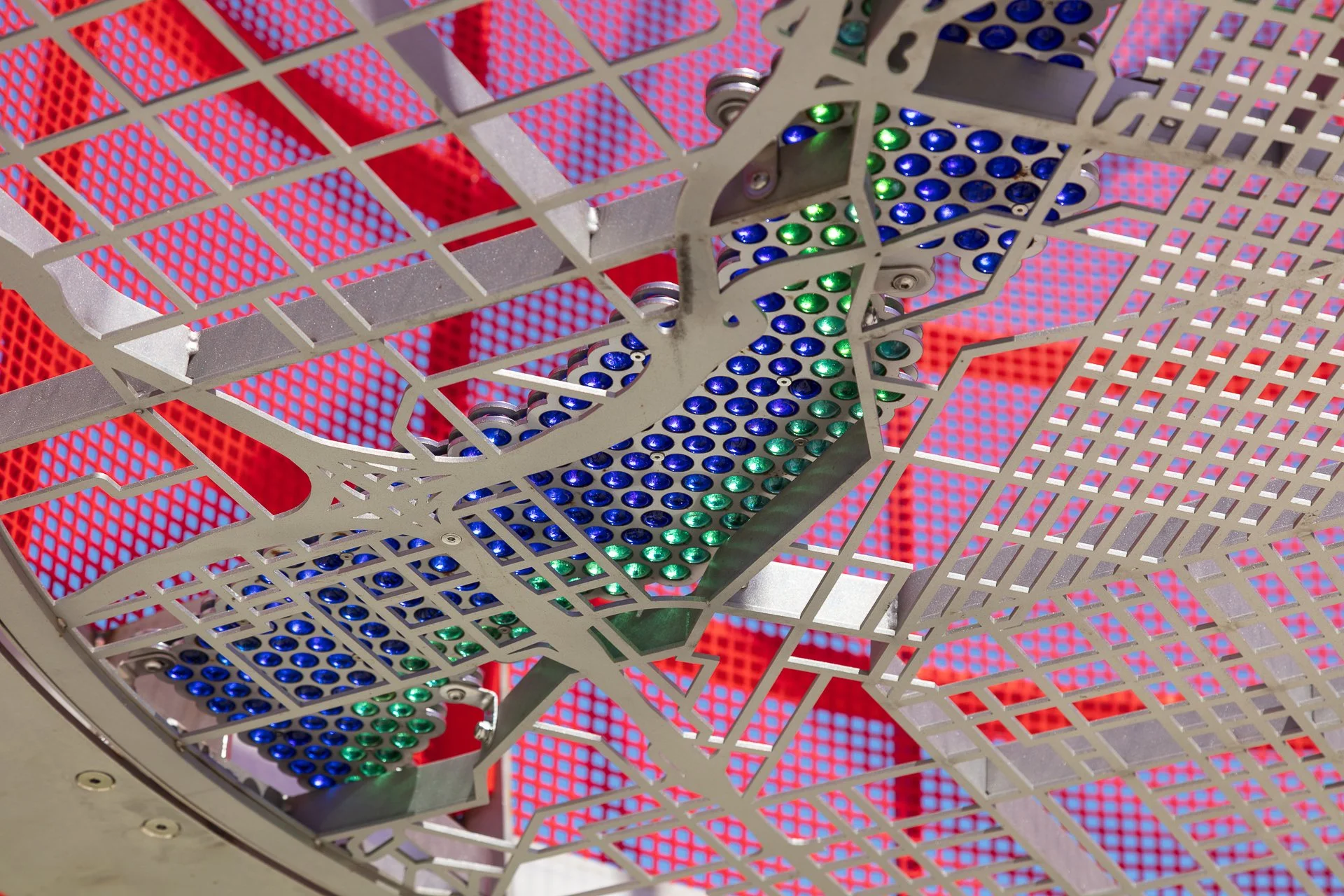
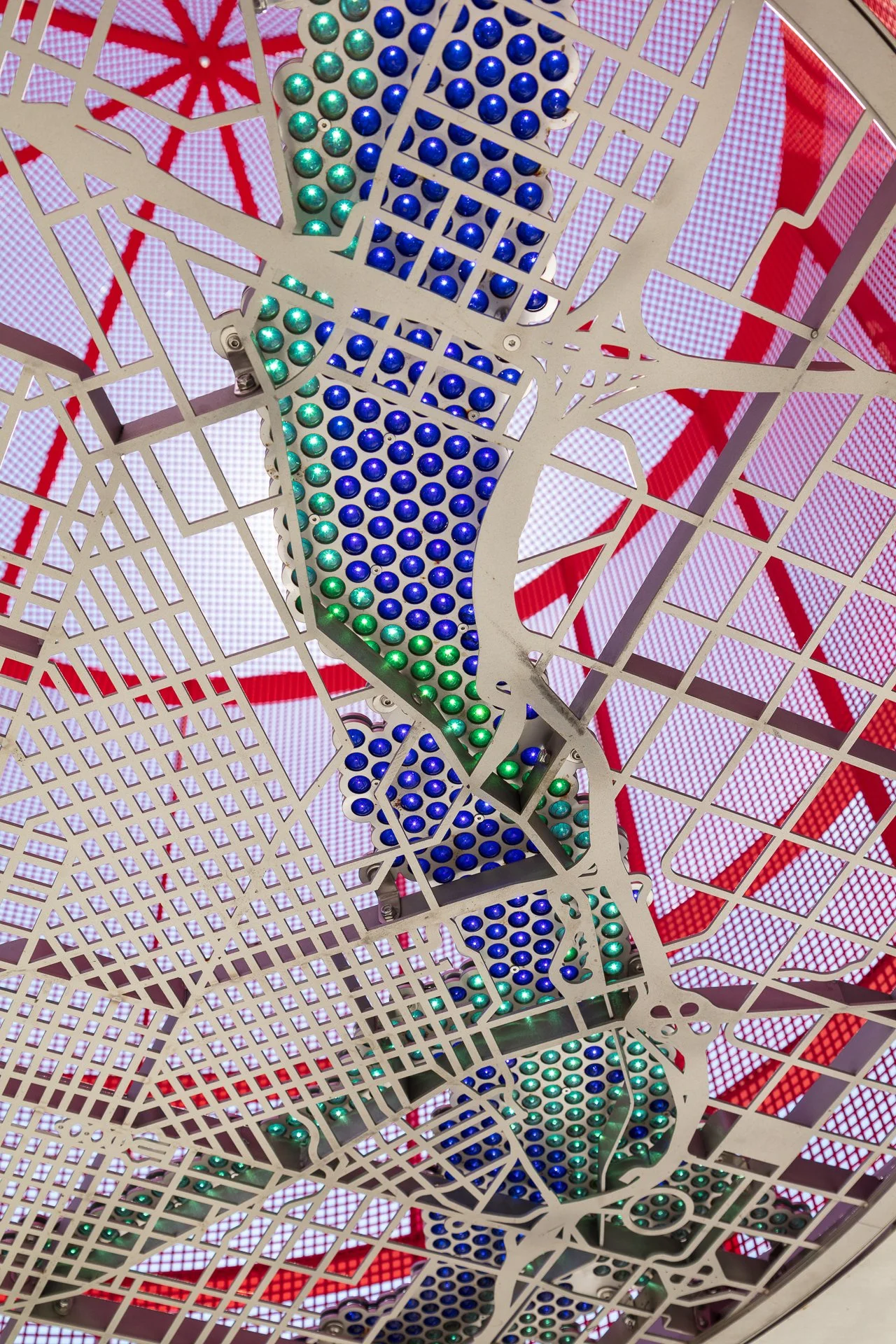
Housed below a ghostly water tower shaped structure reminiscent of one removed nearby, a map of Denver has the flood events marked with glass marbles. “We wanted to do a piece that had a direct connection to the actual function of the site,” the artists say. “It’s a playful way of reminding everyone why they’re there.”
02. ZEPHYR
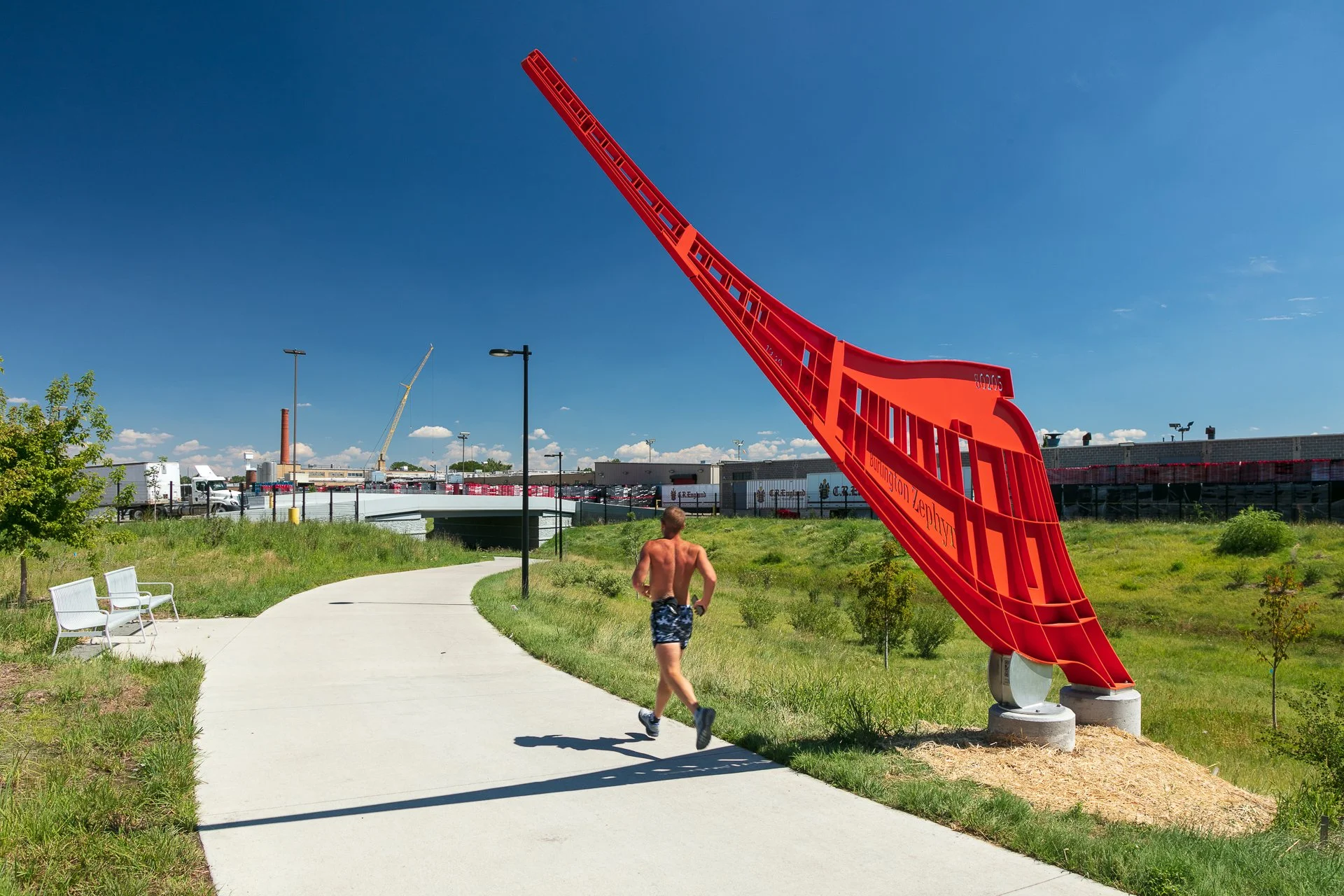
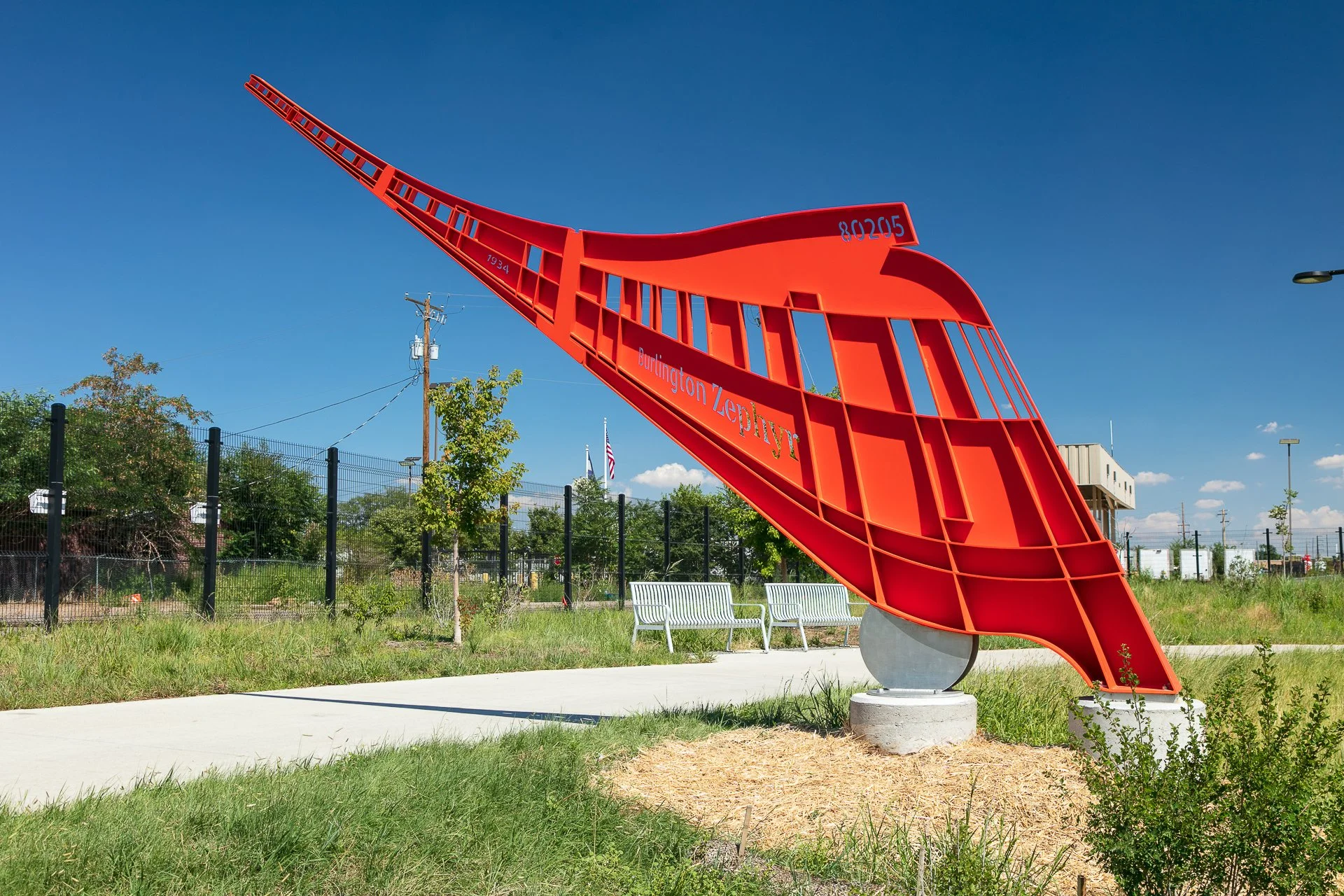
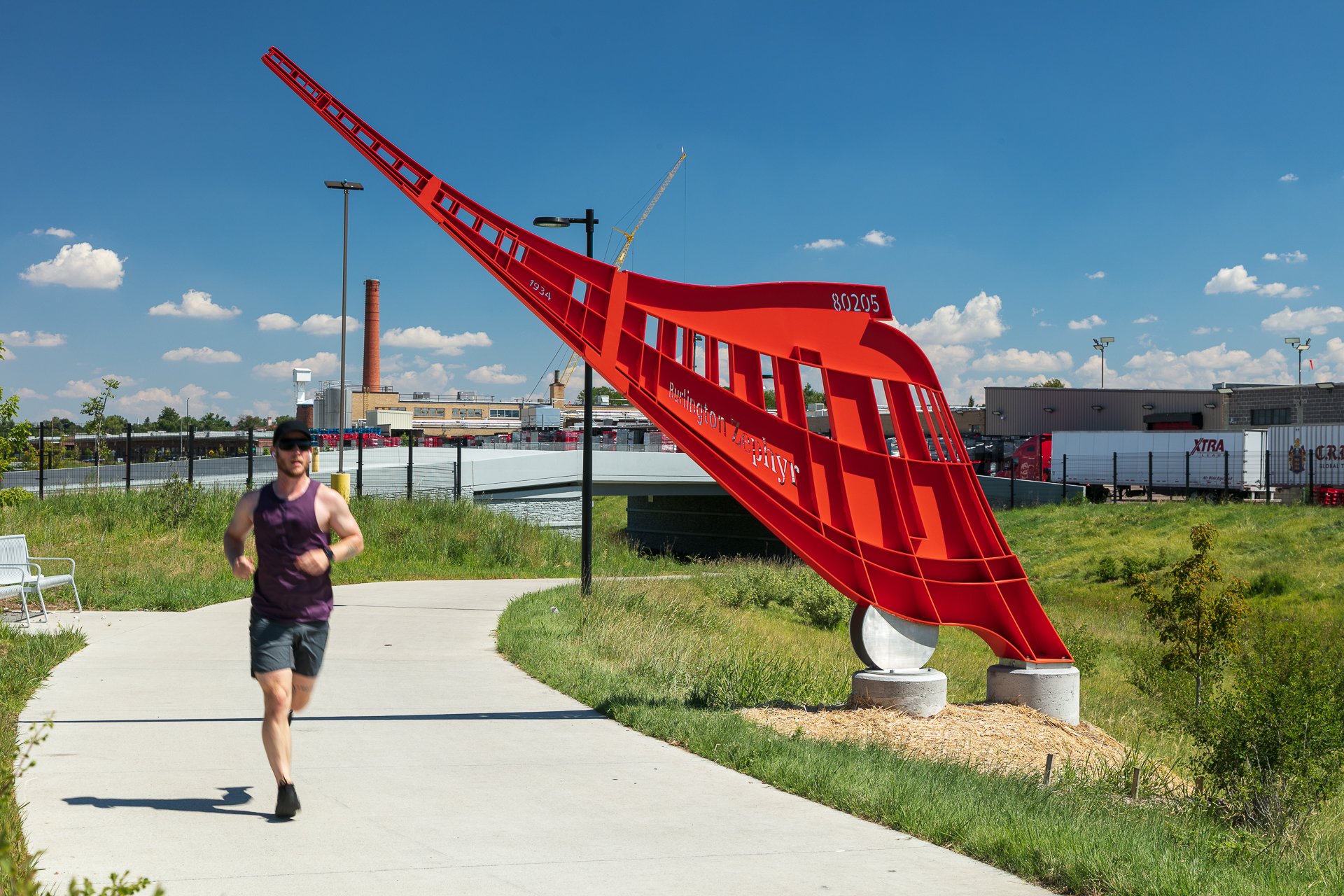
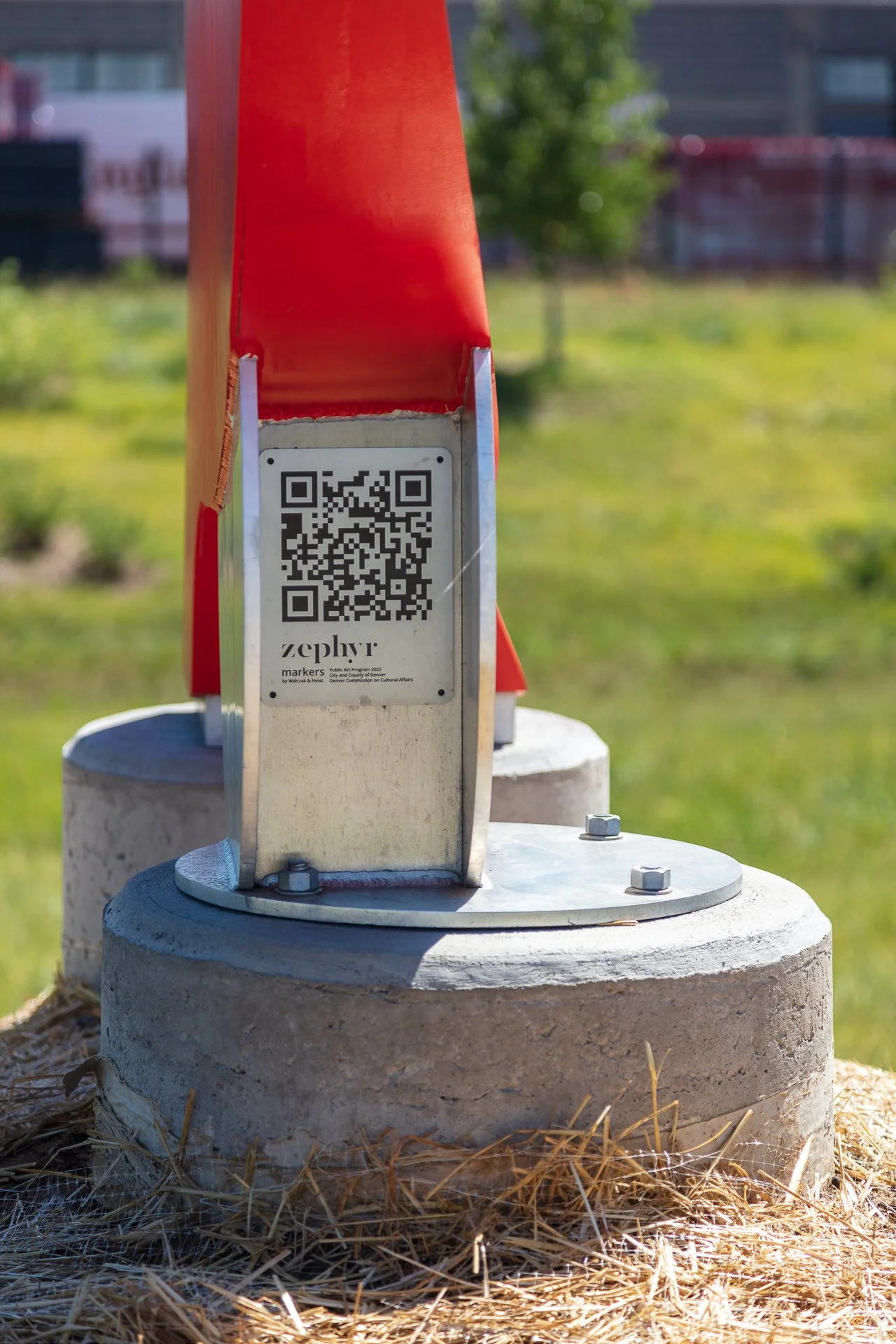
Time and place are united in Zephyr, as its dynamic form points to the site’s history as the location of a former rail line. In conceiving this project, “One of the things that popped up was the Burlington Zephyr, which was arguably the first successful streamliner train,” the artists said. “It set a speed record in 1934, running from Chicago to Denver, and it went right through the site on the rail lines that were extracted and removed from the site for this project to be done. We thought it would be great to bring back the train to this unassuming but historic place.”
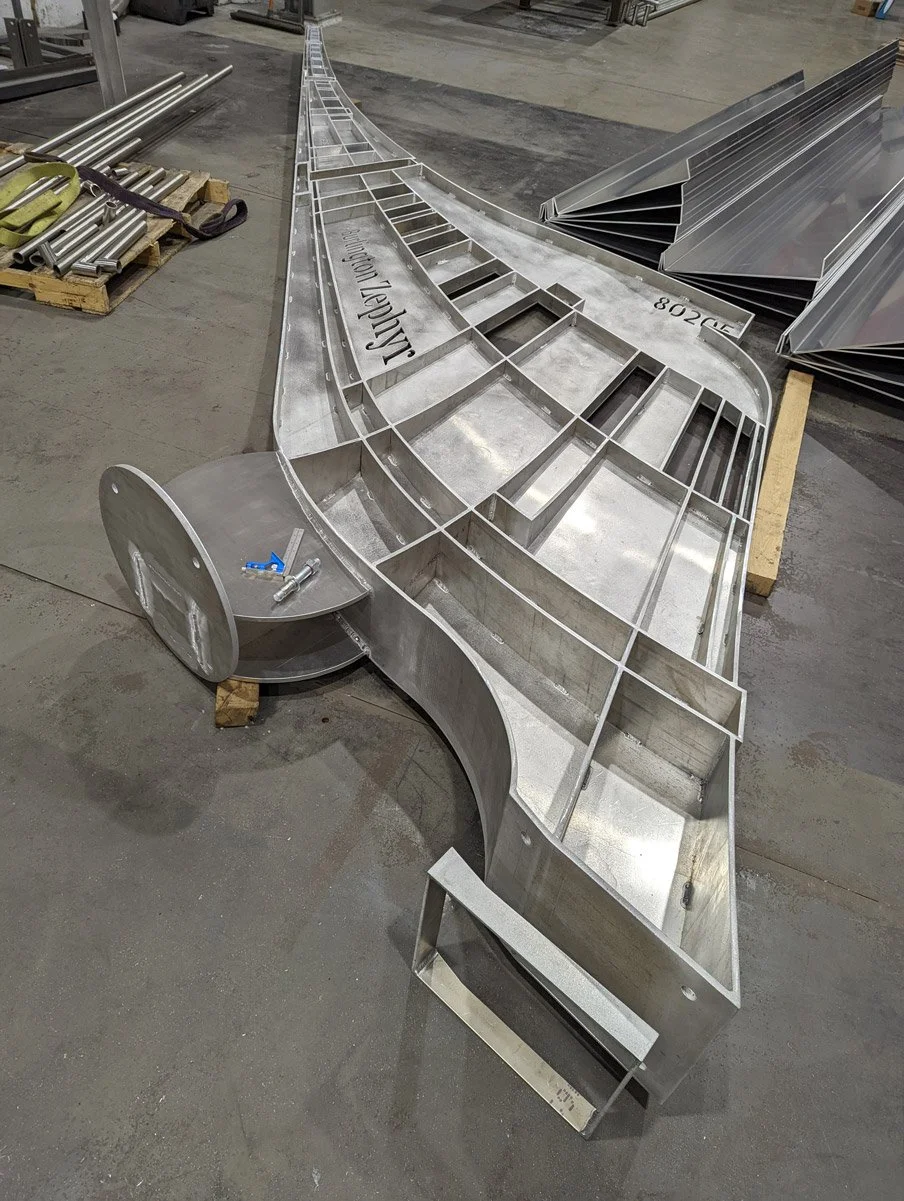
The work captures the energetic feeling of a train whooshing through space and time as the metal swoops out, taking on the form of a train craning around a corner. Speaking about its creation the artists said “We think about time and speed and your place in that relationship. The object is actually a sundial.” The sidewalk below the towering sculpture has been marked to correspond to the sculpture’s shadowy path as the day wears on.
03. WHEREAMI
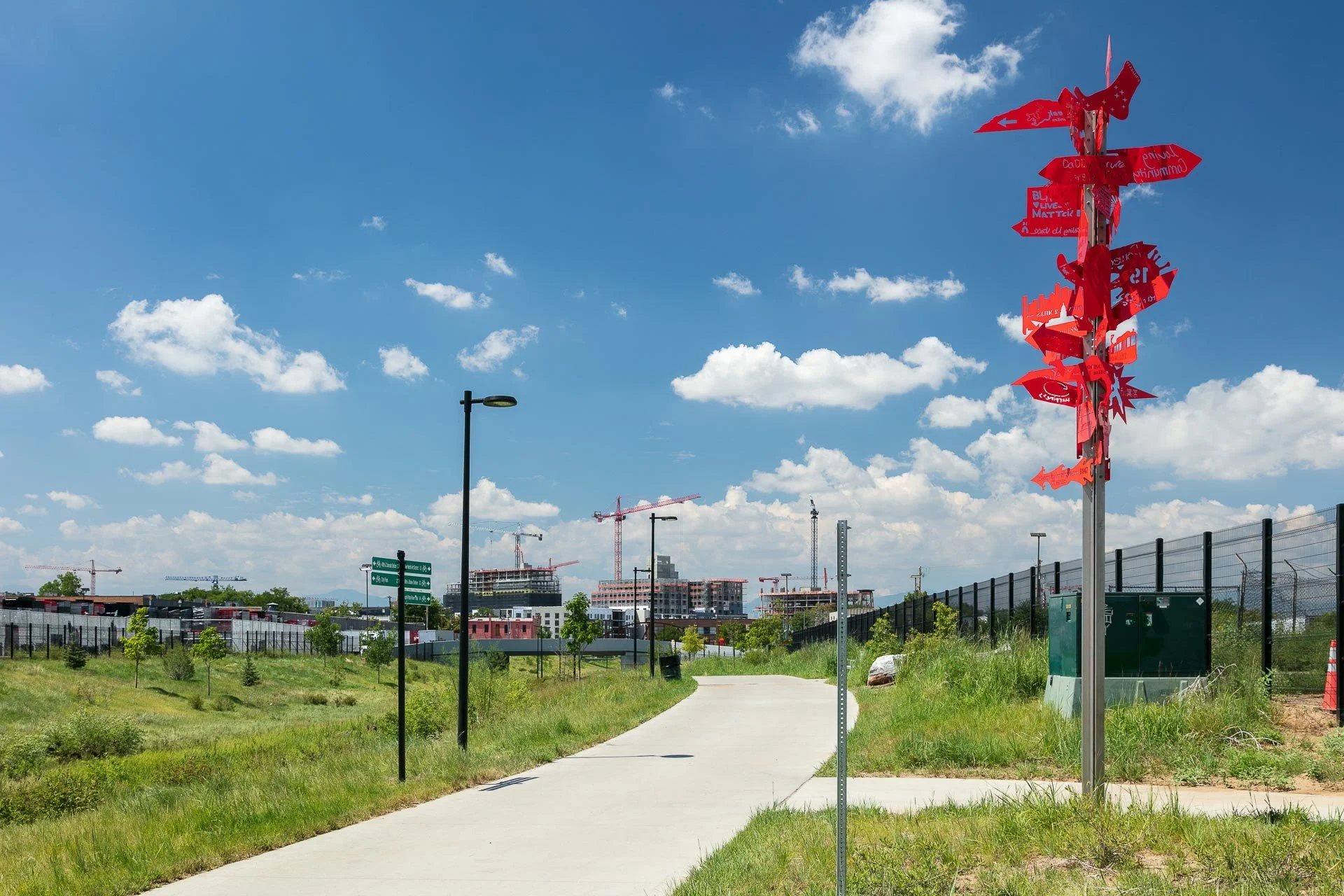
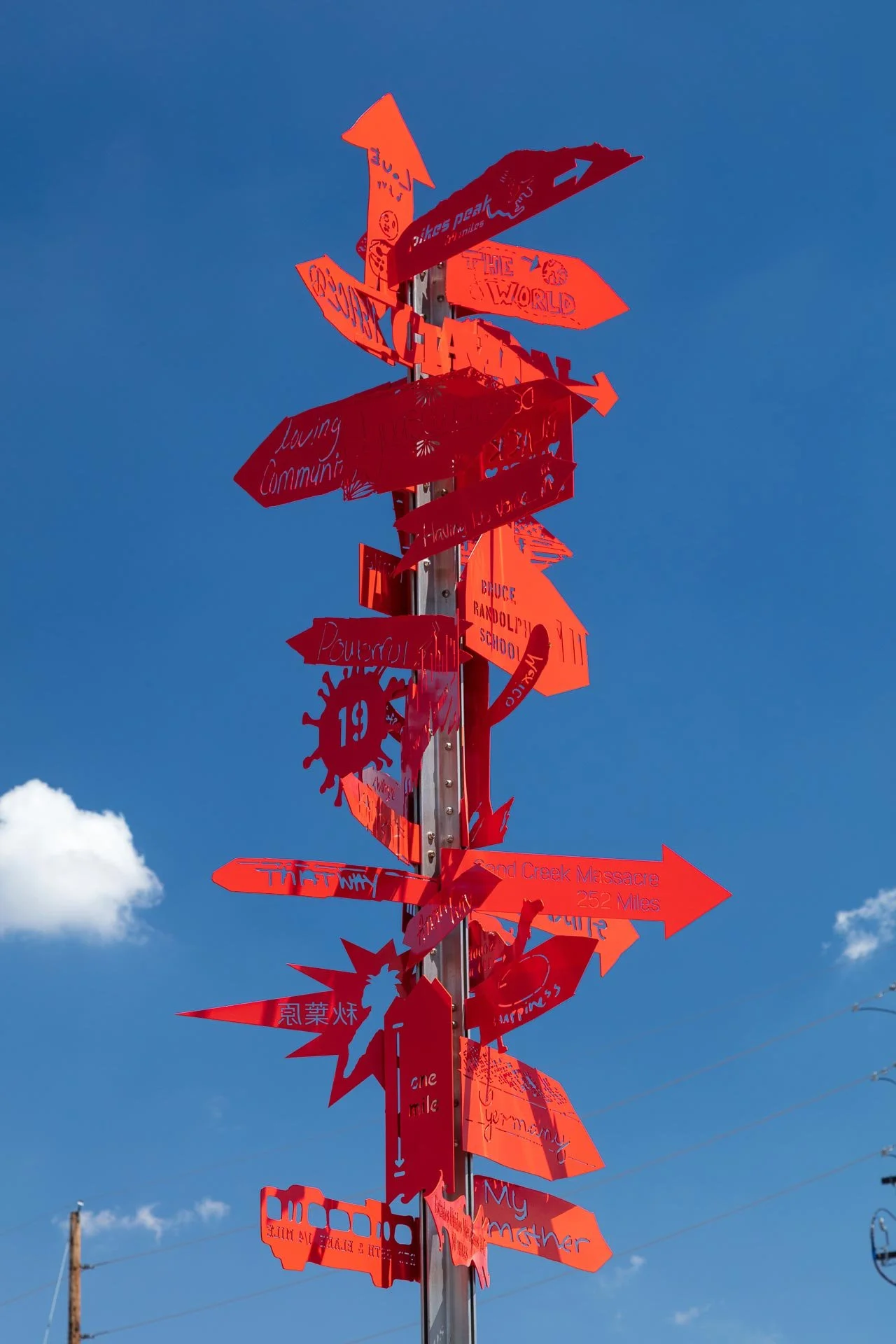
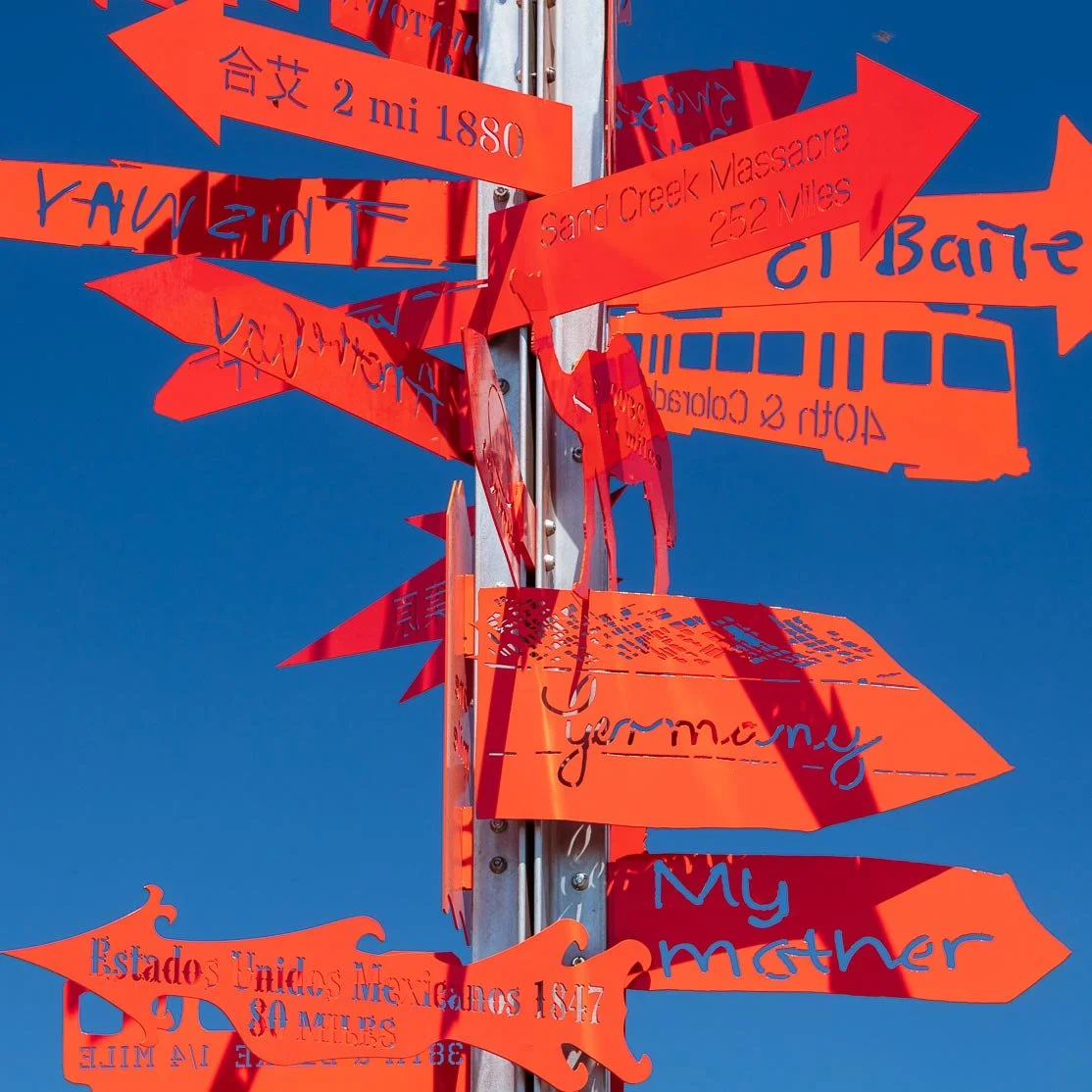
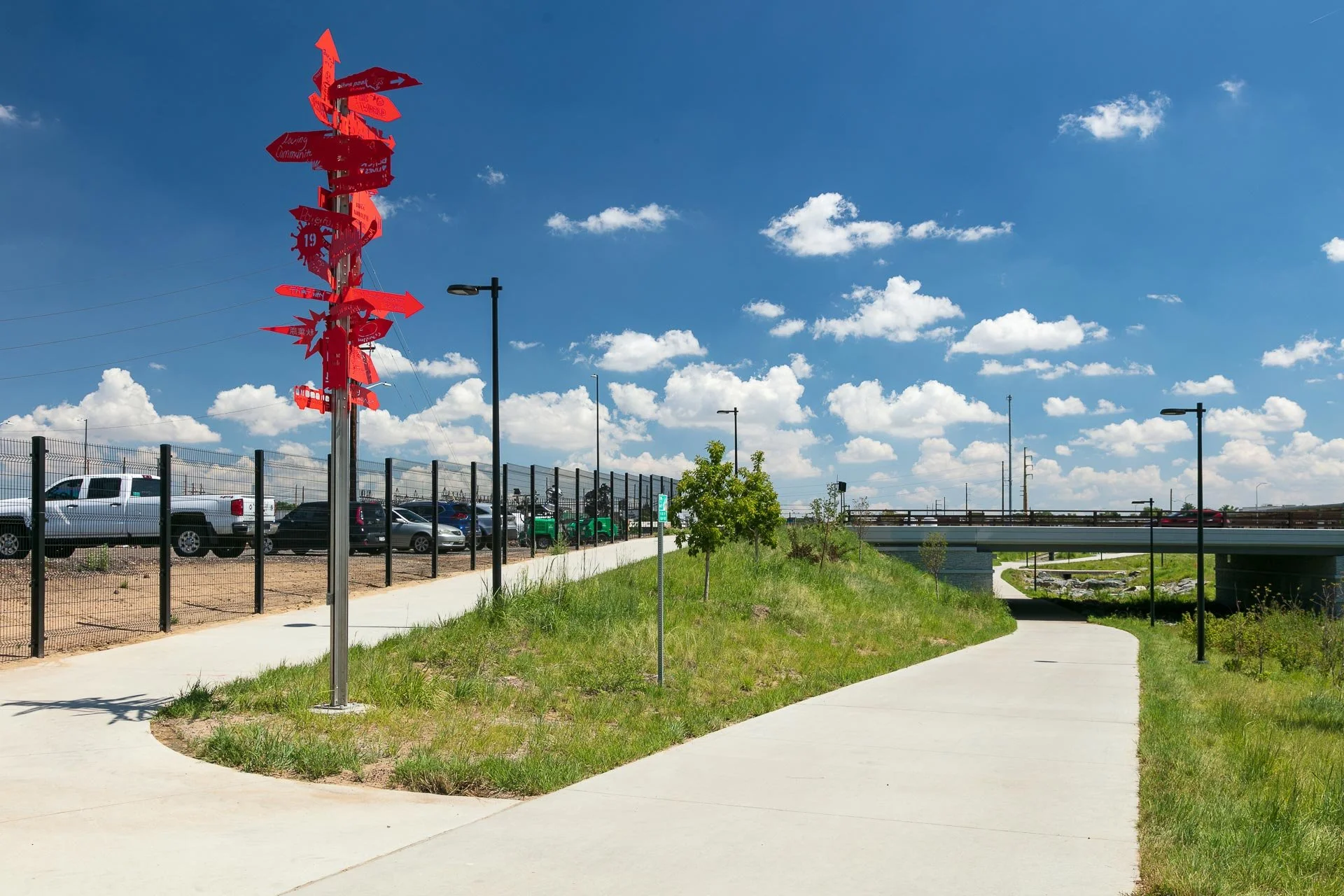
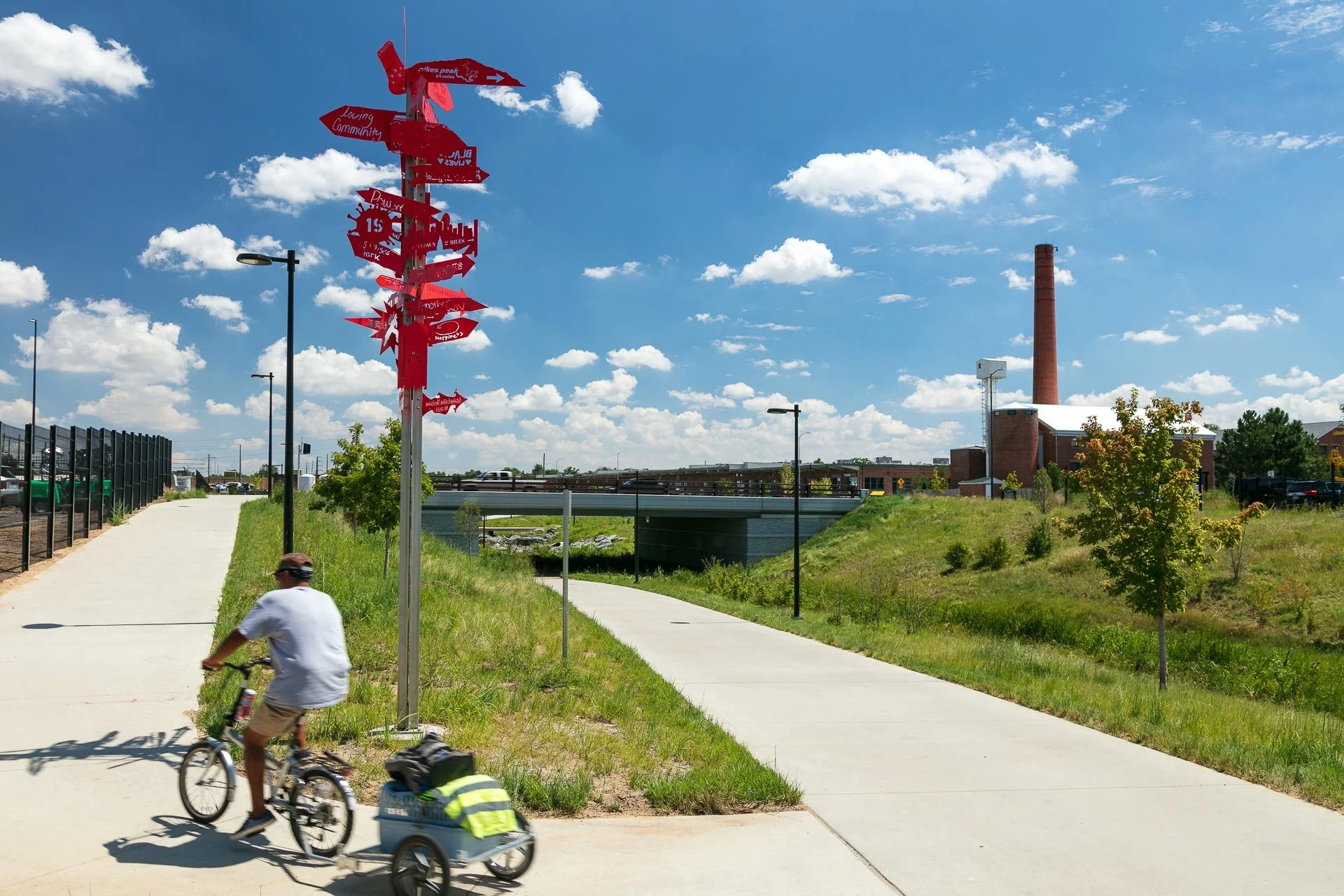
Whereami is a playful, wayfinding sign rising 16-feet into the air and featuring 37 student-designed arrows all pointing in different directions. It was a collaboration with sixth through twelfth graders at the Bruce Randolph School located in the Cole neighborhood. Walczak & Heiss visited the school and challenged students to create their own arrow designs that pointed to sites meaningful to them.
Each of the arrows selected for the project points to a unique location—everywhere from as close as downtown Denver and nearby playing fields to locals as far and diverse as Germany and that of the Sand Creek Massacre, a site 252 miles away that marks the murder of Cheyenne and Arapaho peoples. Local history is also represented as one arrow nods to Daddy Bruce Randolph, the namesake of the school, by pointing to Daddy Bruce Barb B Que Ribs.
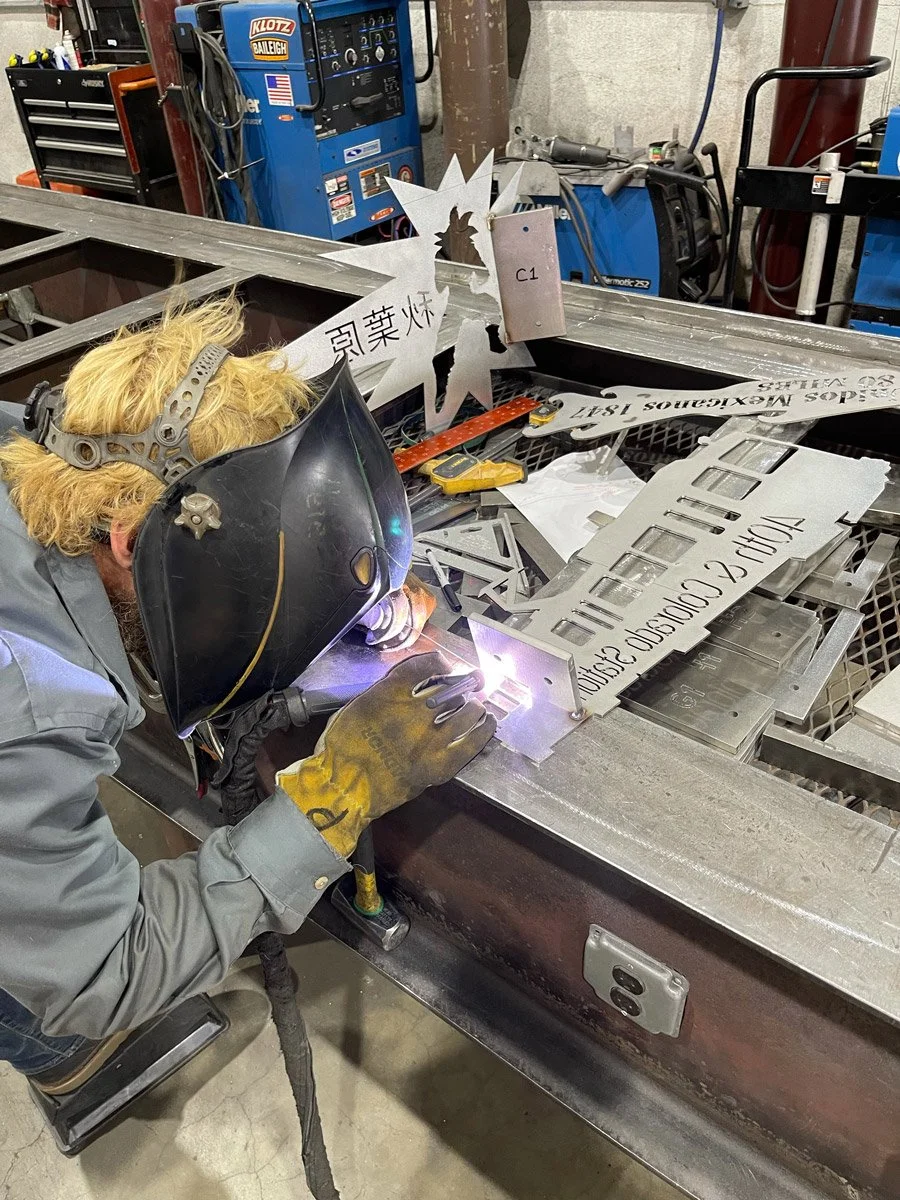
To go from the students’ 2-dimensional drawings to the 3-dimensional metal artwork, the drawings were scanned and traced in a CAD program. From there, Allentown-based DiBello Metal Designs made the stainless-steel and orange powder coated arrows. All of the arrows are carefully balanced on a singular pole, which proved to be an engineering feat as each one needed to remain clearly legible. The artists explained that, “it makes this kind of prickly looking, confusing, jumbled wayfinding sign. The piece is not really about letting it be pointedly about a location that somebody knows, but about a kind of personal connection to a place.”
03. CONVERSATION
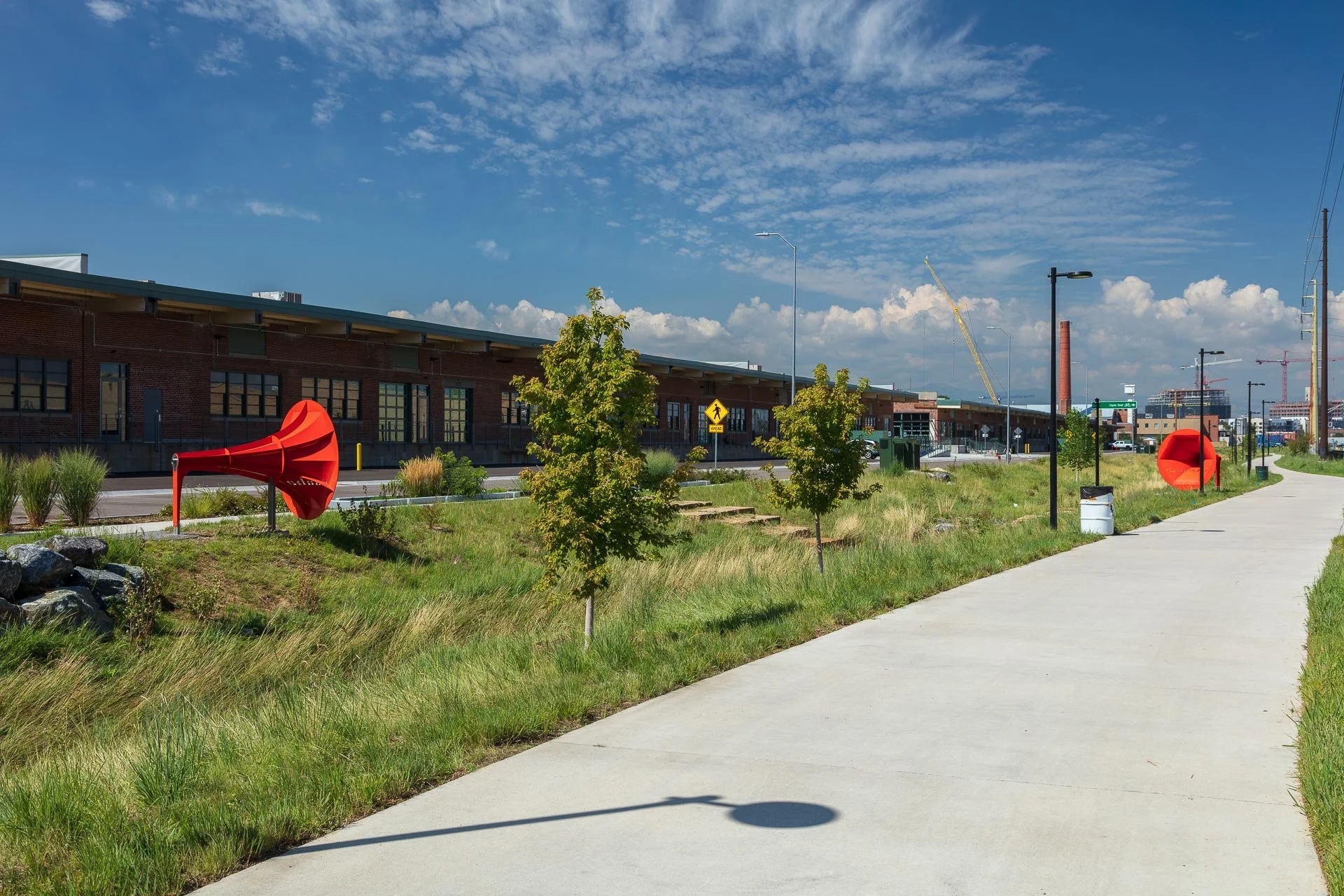
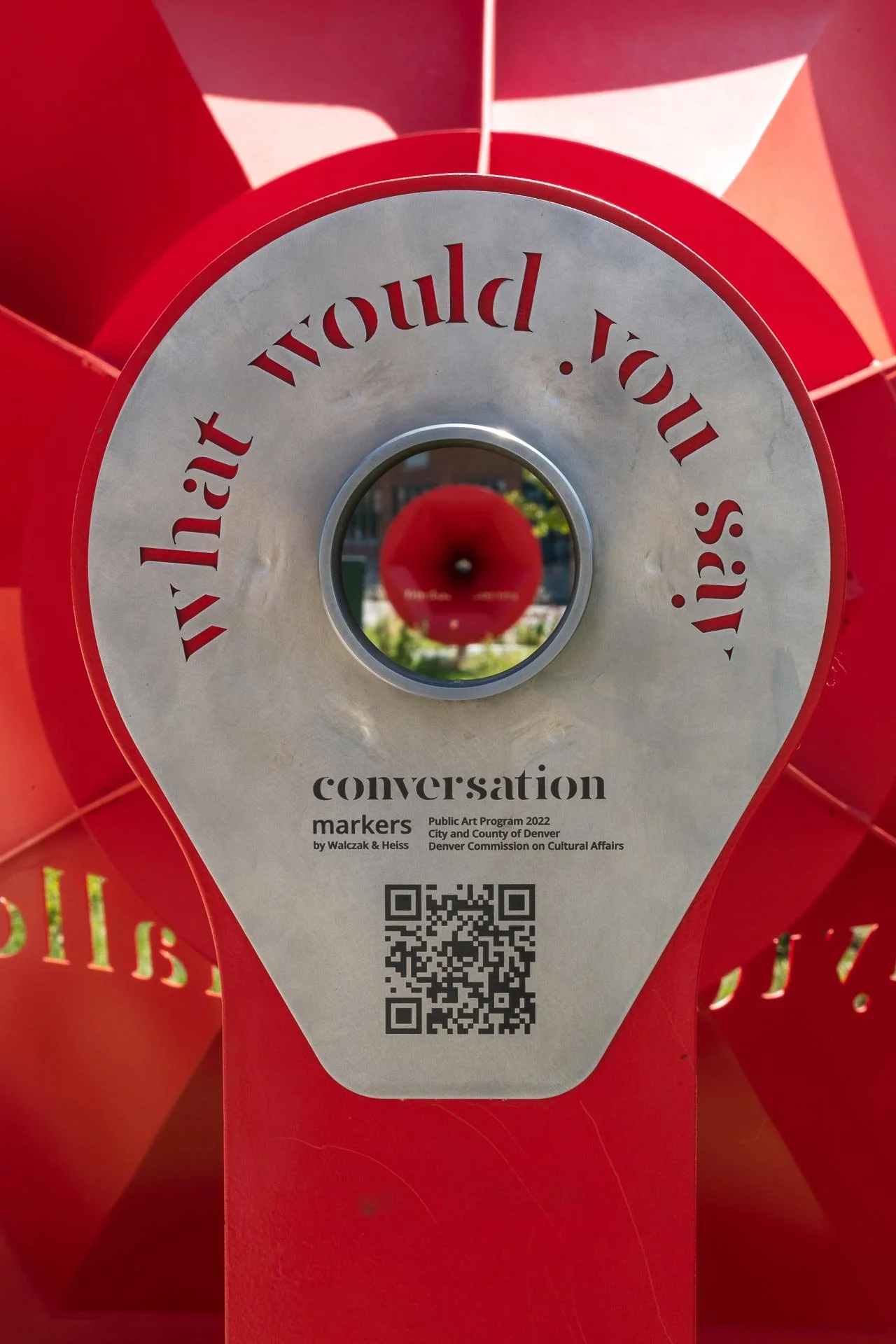
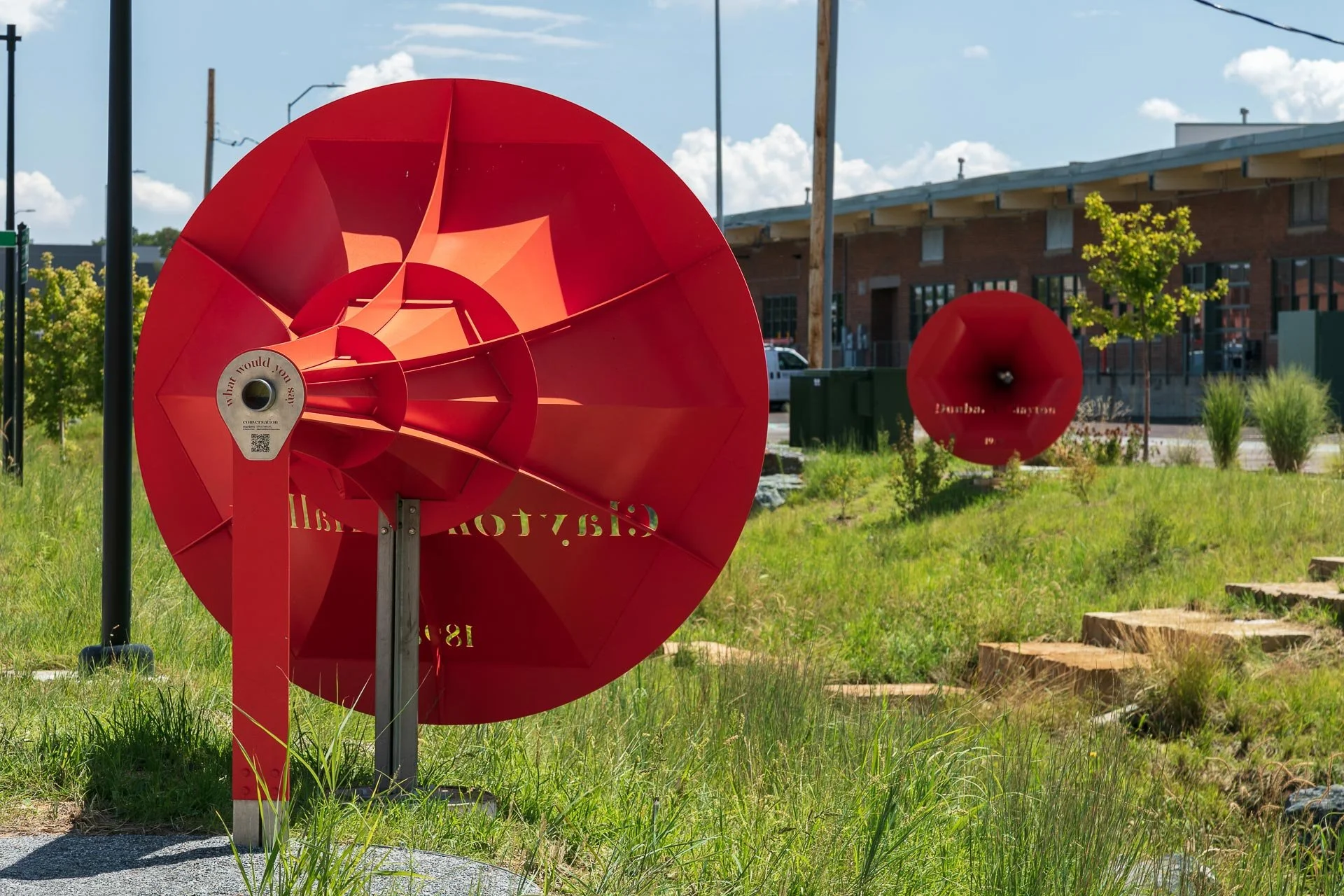
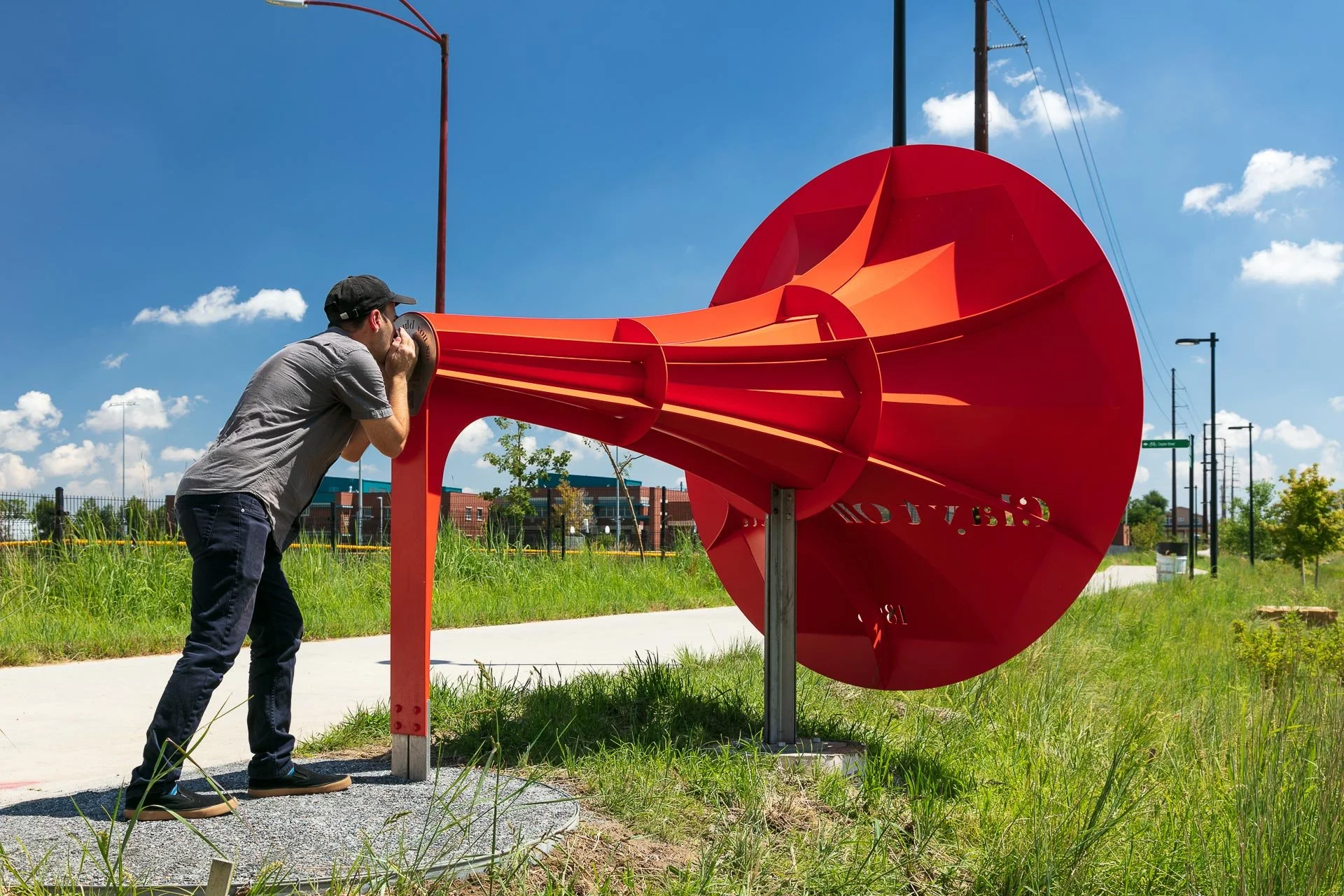
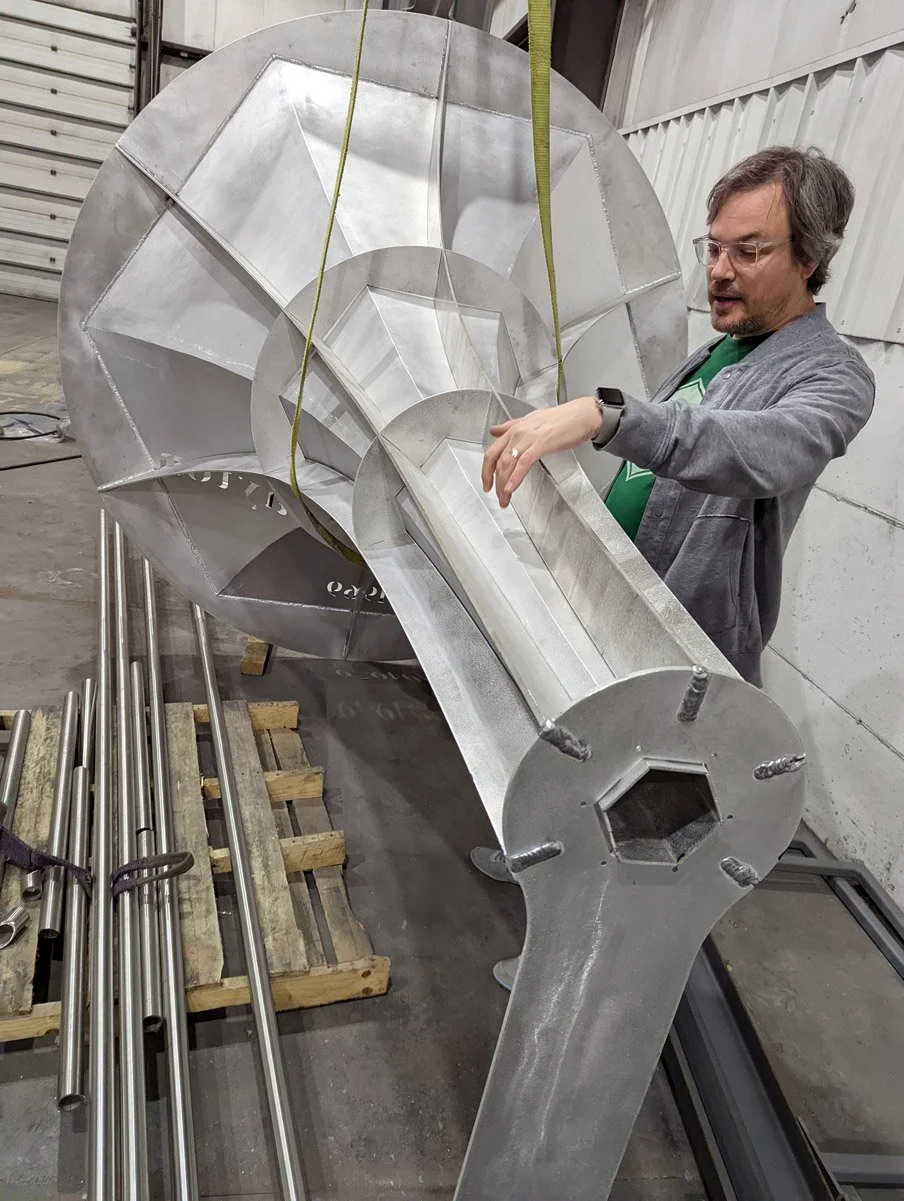
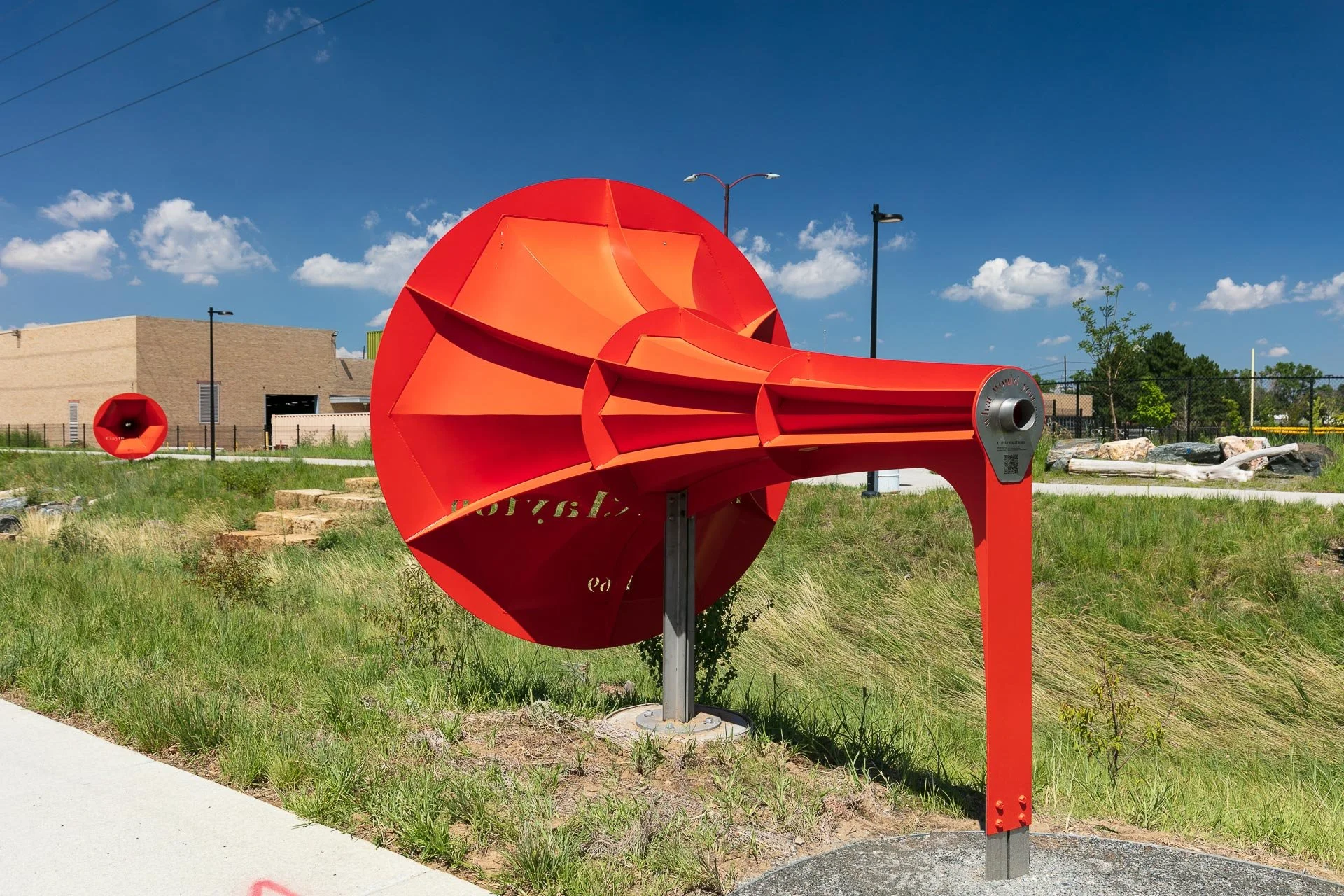
This sculpture consists of two metal horns that resemble larger than life megaphones. The familiar form invites visitors to come closer and explore. Positioned across from each other and separated by a field, the megaphones allow people to speak to each other at a distance.
A German engineer consulted on the project so that even a quiet whisper would be amplified and projected through space. At once reminiscent of playful childhood games, Conversation also points to the critical contemporary dialogue on race. Inscribed on the surface of each horn are references to two important court decisions in Denver concerning race–Clayton v. Hallett (1898) and Dunbar v. Clayton (1969). The earlier case specified founding principles for Clayton College, establishing it as a school for orphaned white boys. In the second case, the discriminatory nature of the school was successfully challenged.